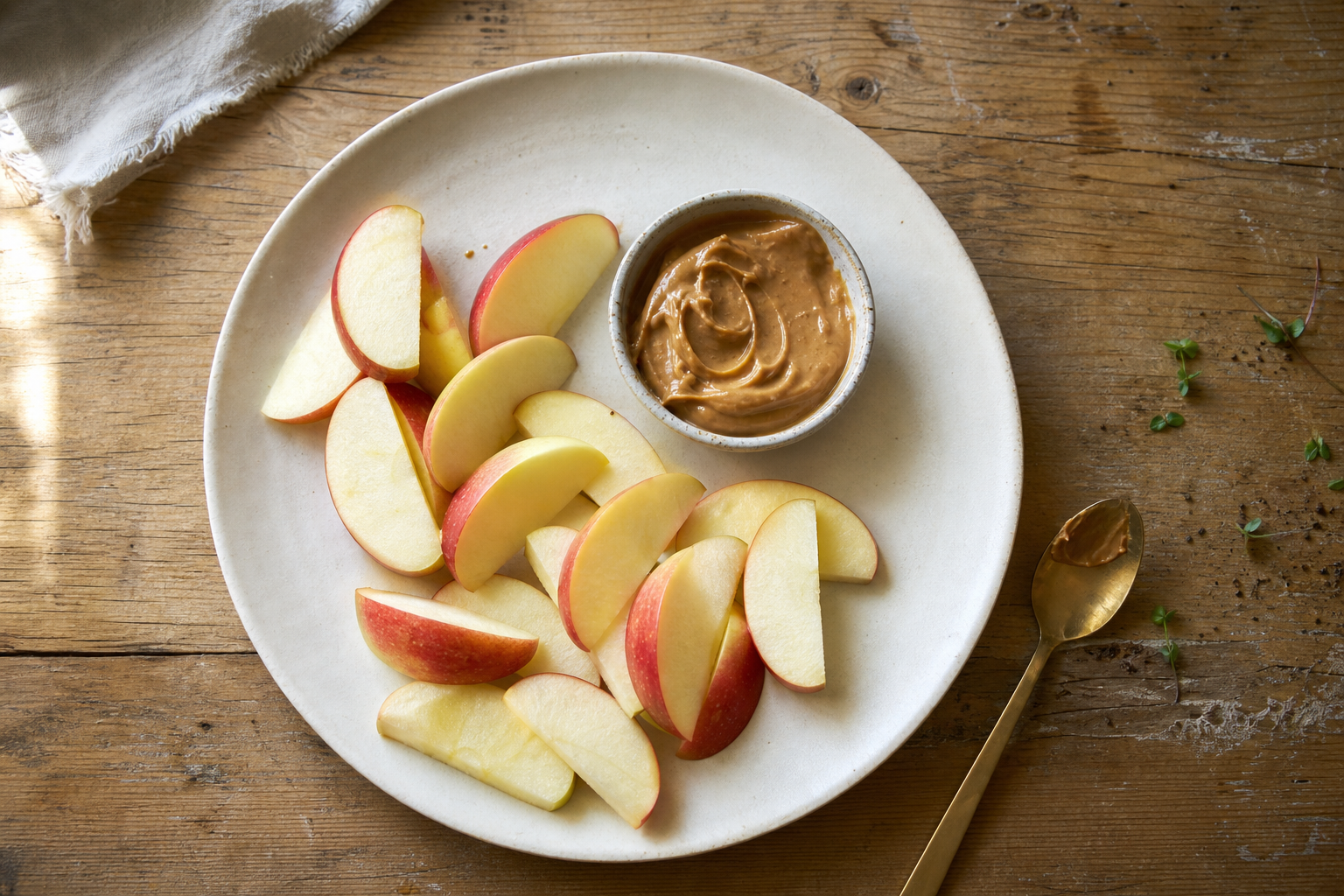
Digital Download
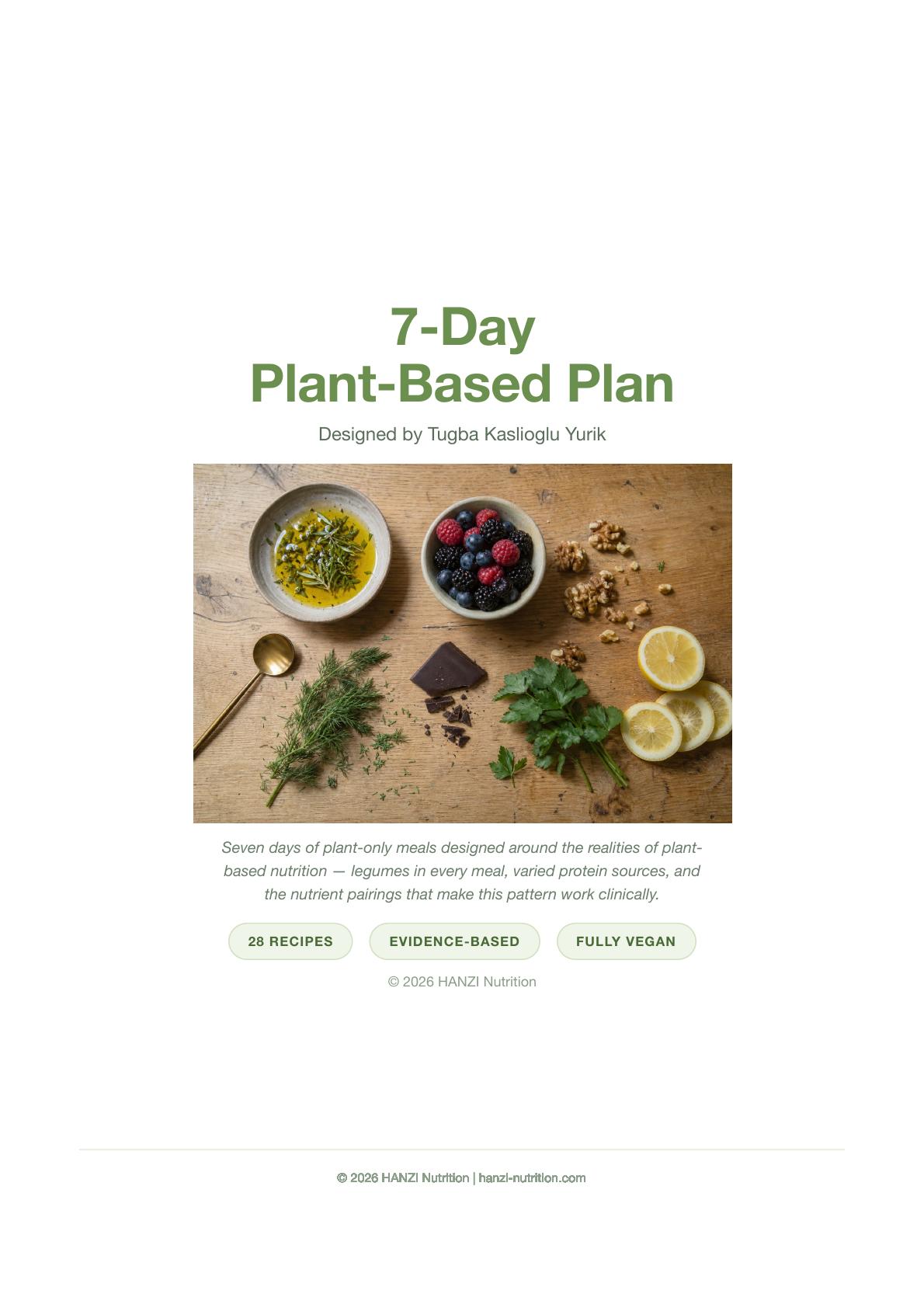
7-Day Plant-Based Plan
€3.99
Seven days of whole-food plant-based eating — legumes, whole grains, leafy greens, nuts, seeds, fruits. Protein-adequate, B12-aware, satiety-built. Not a sermon, just a one-week practical plan.
1
Secure Payment
Instant Download
Satisfaction Guaranteed
What You'll Get
- Downloadable PDF (39 pages)
- 28 unique recipes (21 mains + 7 snacks)
- 7-day sample rotation
- Weekly shopping list
- Activity-Level Addendum (BMR + portion scaling)
- 4 cited references
From Tugba
Plant-based eating works clinically when it's planned, not when it's improvised. The literature is generous about cardiometabolic benefits and quieter about the things you need to actively manage — B12 supplementation, iron pairing, omega-3 sources, varied legumes for amino acid coverage. This 7-day plan handles all of those for you. Legumes appear in every main meal; the macros land where they should; B12 is the one supplement I ask you to keep taking regardless.
— Tugba
Plan at a Glance
Daily macronutrient split
Fat — 27%
Protein — 18%
Carbs — 55%
Target: ~1,800 kcal/day — scaleable via the included Activity-Level Addendum.
28 RecipesEvidence-BasedFully Vegan
Clinical Foundations
The evidence behind this plan, and what the data does and doesn't show
A plant-based dietary pattern excludes all animal products: meat, fish, eggs, dairy. Protein comes from legumes (lentils, chickpeas, beans, soybeans), grains (quinoa, oats, rice, bulgur), nuts, and seeds. The Academy of Nutrition and Dietetics position (Melina, Craig, Levin, 2016) is that appropriately planned vegan diets are nutritionally adequate for all life stages and may provide cardiometabolic benefits. The word that matters there is planned: a few nutrients require attention.
What the evidence supports
Lower rates of type-2 diabetes, lower LDL cholesterol, lower ischaemic heart disease, and lower blood pressure in vegetarian and vegan cohorts (Adventist Health Study-2; EPIC-Oxford; Tonstad et al., 2013). Higher fibre intake supports gut microbiome diversity. Most of these effects are pattern-level and dose-dependent.
What the evidence does not robustly support
Plant-based eating doesn't fix B12 status — B12 is produced by bacteria, found in animal foods, and supplementation is non-negotiable on a fully vegan pattern. ALA (plant omega-3) converts poorly to EPA/DHA; algal oil is a reasonable supplement for people who don't eat fish. Iron from plants is non-heme and absorbed at lower rates — pair with vitamin C, avoid tea/coffee within an hour of iron-rich meals. “Plant-based” doesn't automatically mean healthy; ultra-processed vegan foods exist.
This plan
Targets approximately 1,700 kcal/day with macros at roughly 55% carbohydrate / 18% protein / 27% fat. Legumes appear in every main meal; ALA omega-3 (flax, chia, walnuts) is featured daily; iron-rich plants are paired with vitamin C. Designed for general adult populations following or transitioning to plant-based eating. B12 supplementation is assumed throughout — this plan does not provide it.
⚠ Who this plan isn’t designed for
This plan isn't designed for: people with soy, nut, or legume allergies (these foods appear in nearly every meal); active IBS flare or strict low-FODMAP protocol (legumes, onion, and garlic are central); pregnancy or breastfeeding without explicit physician monitoring of B12, iron, iodine, DHA, and choline; people who haven't yet started B12 supplementation (start before or simultaneously with this plan — cyanocobalamin 50–100 mcg daily or 1000 mcg twice weekly); iron-deficiency anaemia without baseline labs and a clinician-supervised iron strategy.
If any of the above applies, please talk with your physician before starting this plan.
If any of the above applies, please talk with your physician before starting this plan.
Tips for Success
- B12 supplementation is non-negotiable. Cyanocobalamin 50–100 mcg daily, or 1,000 mcg twice weekly. There is no reliable plant-food source.
- Pair iron-rich plants with vitamin C. Lentils with lemon juice, spinach with bell pepper — vitamin C dramatically increases non-heme iron absorption.
- Daily ALA omega-3 sources. 1 tbsp ground flax, 1 tbsp chia seeds, or 15g walnuts. Conversion to EPA/DHA is limited — consider an algal-oil supplement if you don't eat fish at all.
- Vary your legumes across the week. Lentils, chickpeas, black beans, white beans, soybeans — different amino acid profiles complement each other.
- Fortified plant milks for calcium. Choose unsweetened oat, almond, or soy milk fortified with calcium and vitamin D — ~250–350mg calcium per cup.
- Skip tea/coffee within an hour of iron-rich meals. Tannins inhibit non-heme iron absorption.
- Don't equate “plant-based” with “healthy.” Ultra-processed vegan products exist; the pattern matters as much here as anywhere.
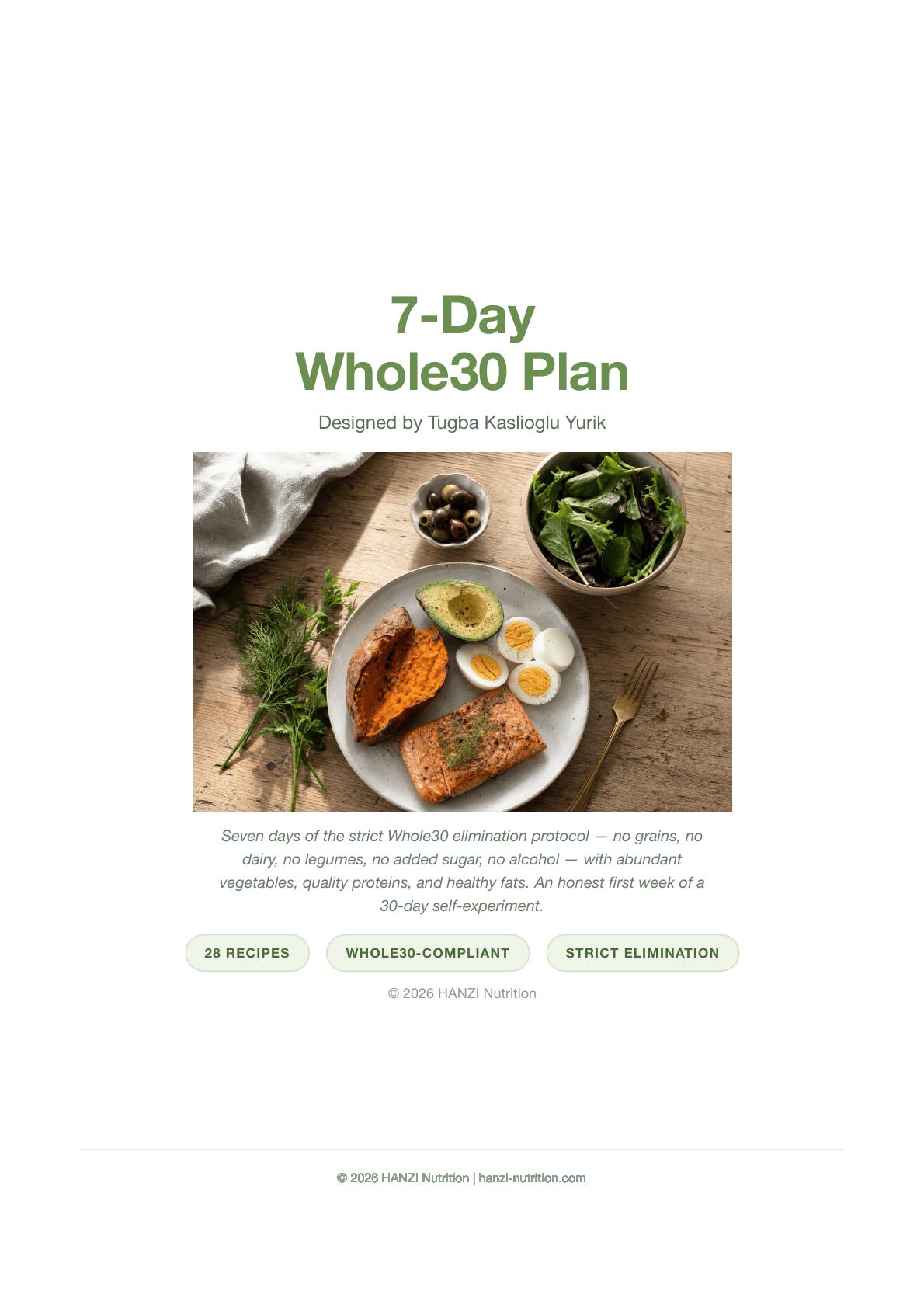
7-Day Whole30 Sampler Plan
A seven-day Whole30-aligned starter — no added sugar, no grains, no legumes, no ...
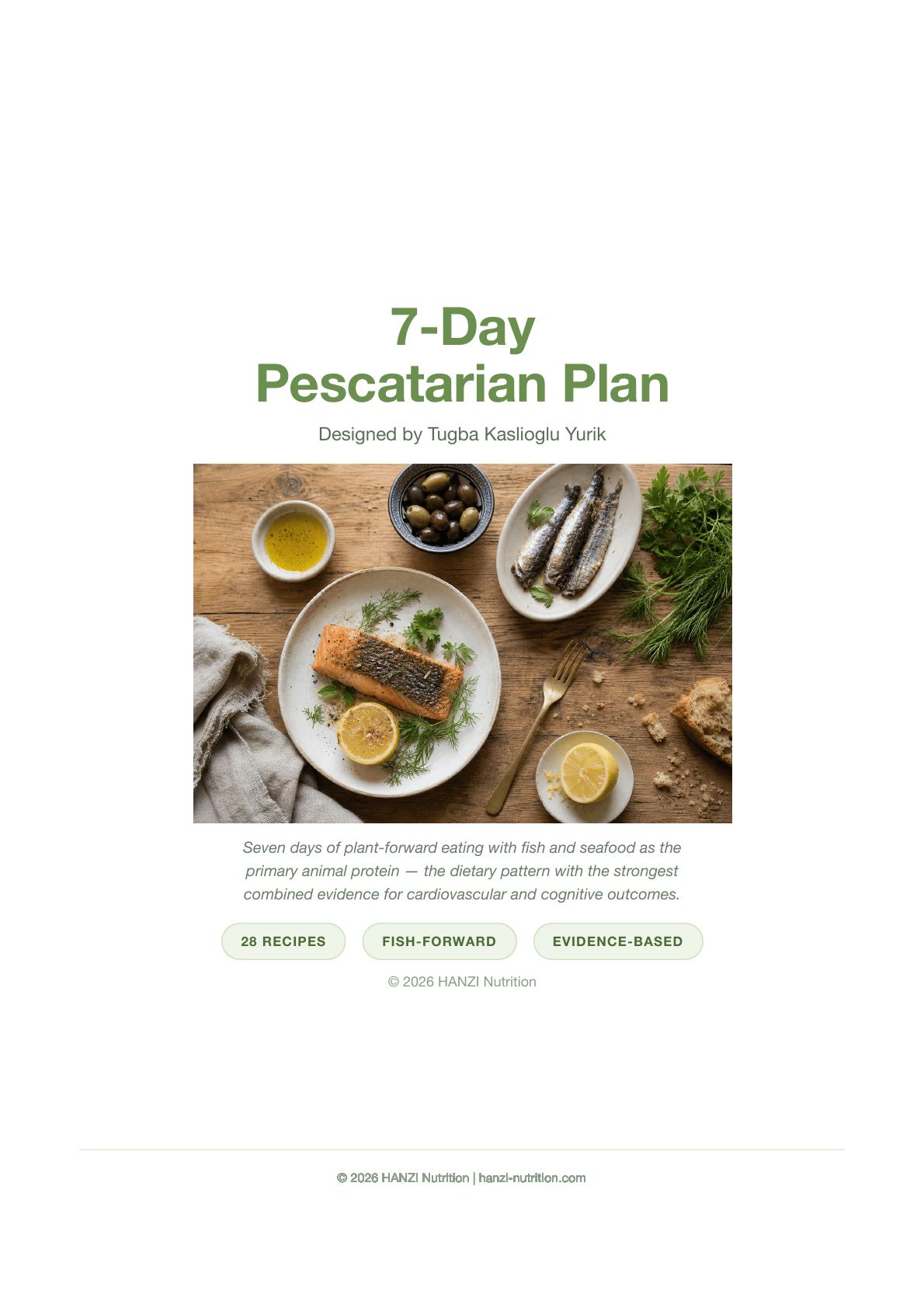
7-Day Pescatarian Plan
Seven days of fish-anchored, plant-forward eating. Omega-3-rich, plant-protein-s...
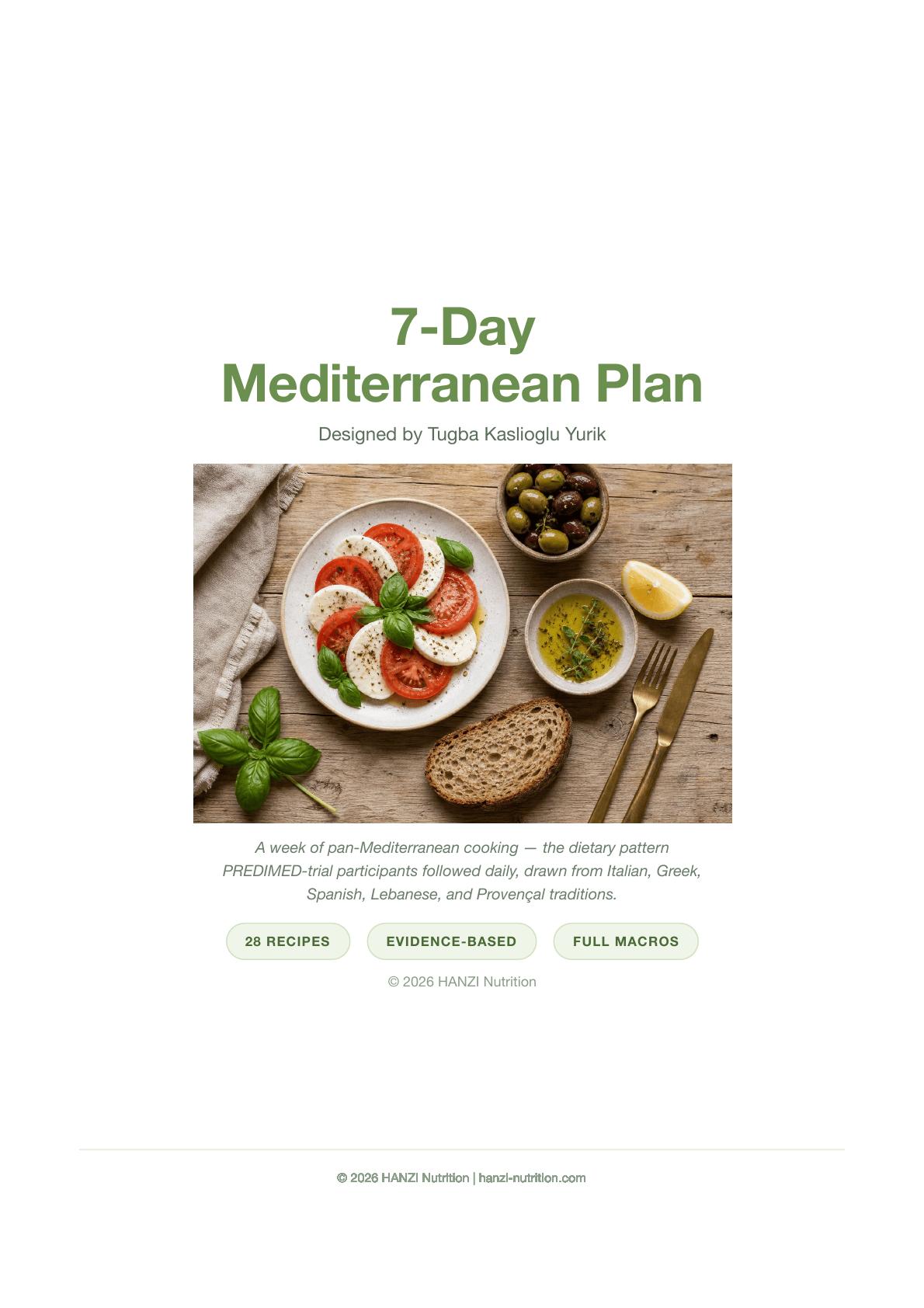
7-Day Mediterranean Plan
Seven days of Mediterranean-pattern eating — olive oil daily, fish twice weekly,...
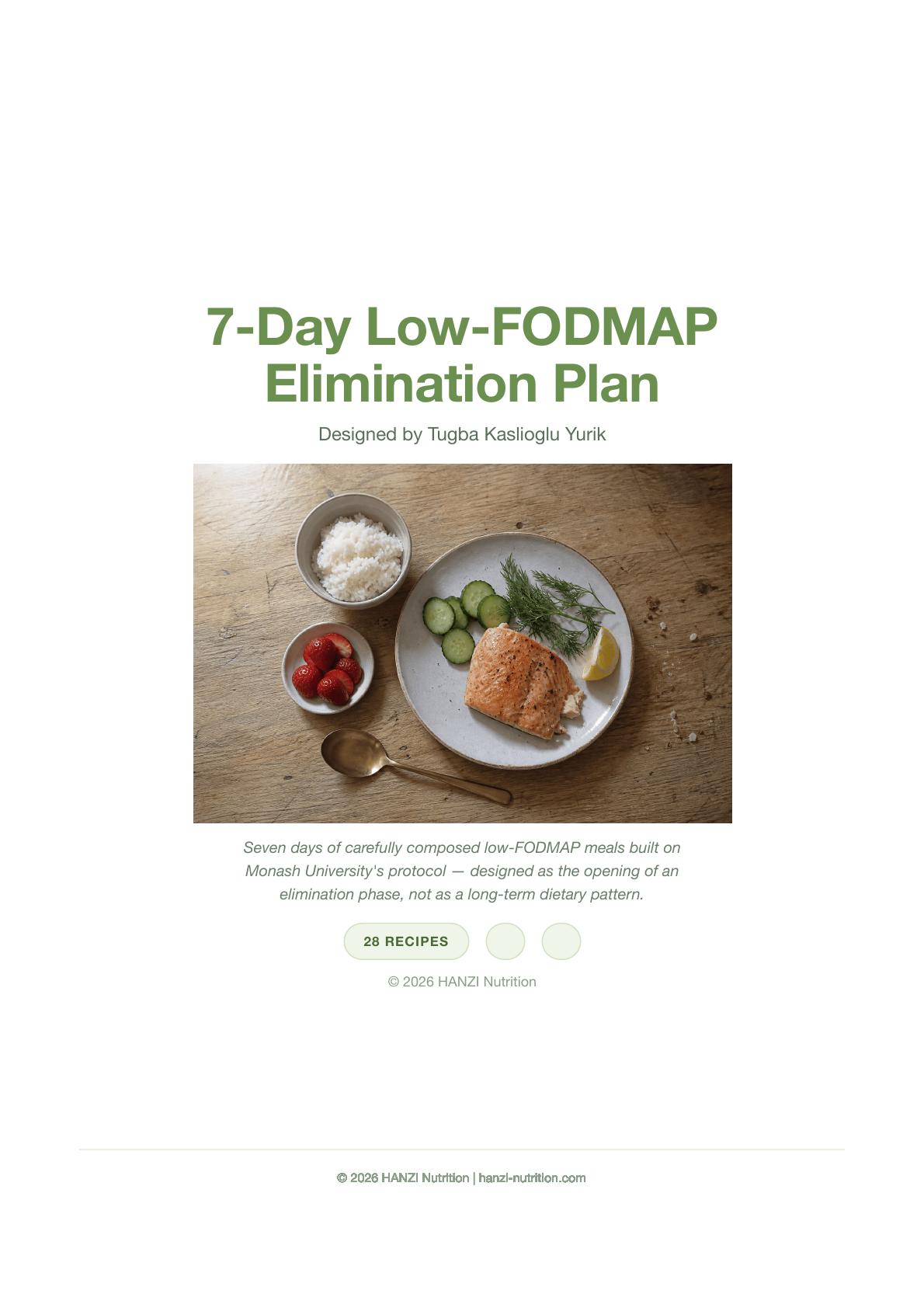
7-Day Low-FODMAP Plan
Seven days of Monash-aligned low-FODMAP eating for IBS-prone digestive systems. ...