

Digital Download
7-Day Low-FODMAP Plan
€3.99
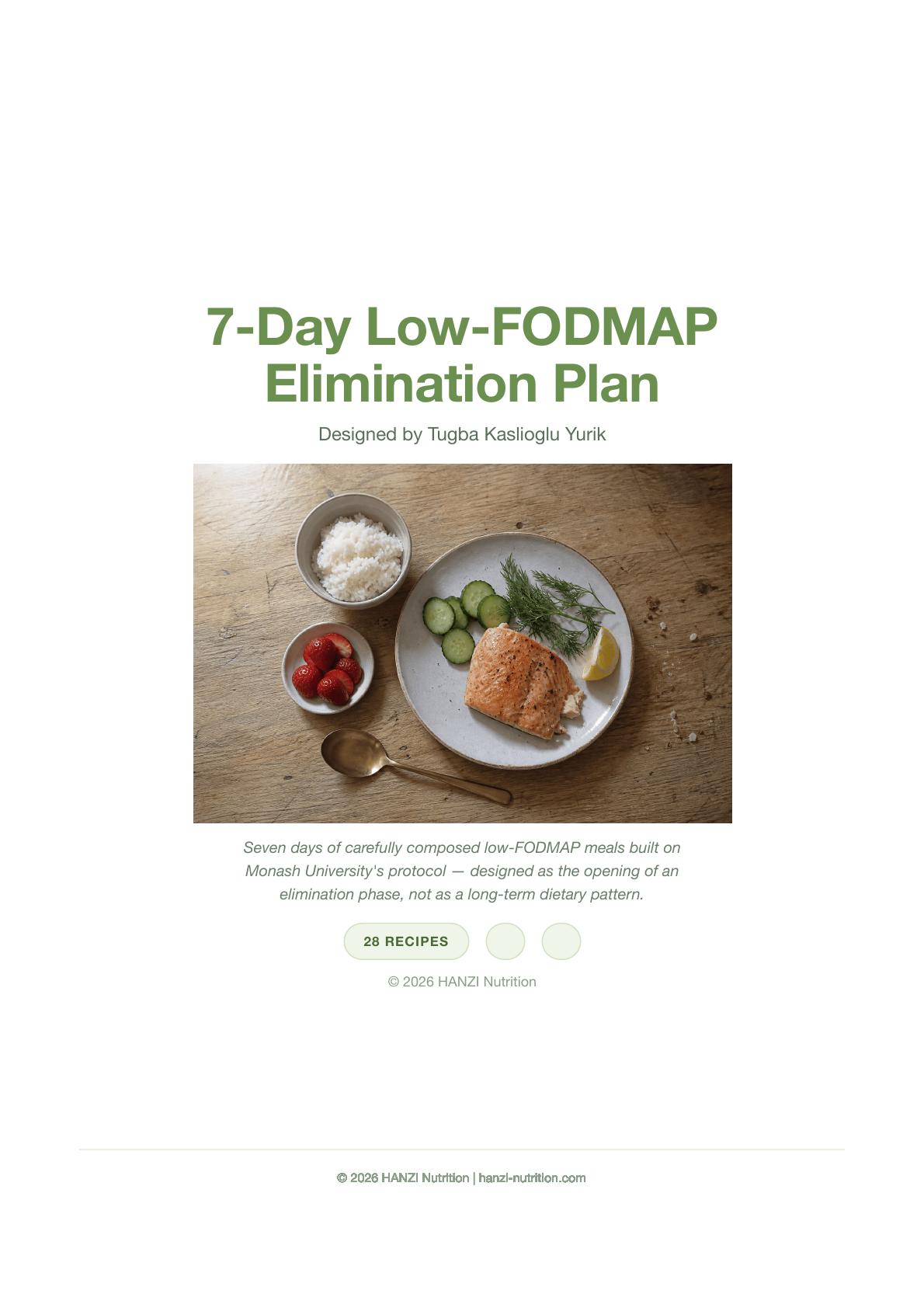
Seven days of Monash-aligned low-FODMAP eating for IBS-prone digestive systems. This is the elimination phase — diagnostic, not permanent. Gut-friendly without sacrificing flavour or variety.
1
Secure Payment
Instant Download
Satisfaction Guaranteed
What You'll Get
- Downloadable PDF (35 pages)
- 28 unique recipes (21 mains + 7 snacks)
- 7-day sample rotation
- Weekly shopping list
- Activity-Level Addendum (BMR + portion scaling)
- 4 cited references
From Tugba
If you've come to this plan, IBS-type symptoms have probably been making your meals an experiment in dread. The low-FODMAP protocol isn't a long-term diet — it's a structured investigation. This 7-day plan opens the elimination phase: foods high in fermentable carbohydrates are removed so that, if FODMAPs are driving your symptoms, you'll begin to notice change. Full clinical benefit usually requires 2–6 weeks of elimination followed by a careful reintroduction phase. This is the start, not the protocol.
— Tugba
Plan at a Glance
Daily macronutrient split
Fat — 30%
Protein — 20%
Carbs — 50%
Target: ~1,700 kcal/day — scaleable via the included Activity-Level Addendum.
28 Recipes
Clinical Foundations
The evidence behind this plan, and what the data does and doesn't show
FODMAPs — Fermentable Oligosaccharides, Disaccharides, Monosaccharides And Polyols — are short-chain carbohydrates that some people's small intestines don't absorb efficiently. They draw water into the gut and ferment in the colon, producing gas. For people with IBS or IBS-type symptoms, this can trigger pain, bloating, urgency, and altered bowel habit. The Monash University low-FODMAP protocol restricts these carbohydrates during an elimination phase to test whether reducing them improves symptoms.
What the evidence supports
Multiple randomised controlled trials and meta-analyses (Halmos et al., 2014; Marsh, Eslick & Eslick, 2016) demonstrate that a properly implemented low-FODMAP diet reduces functional gastrointestinal symptoms in approximately 50–75% of IBS patients. The Monash University FODMAP team continues to update threshold data via their app and research publications.
What the evidence does not robustly support
Low-FODMAP is not a long-term diet. Long-term restriction can negatively affect gut microbiome diversity and is unnecessary once trigger foods are identified. It is not designed for non-IBS gut conditions (e.g., active IBD, coeliac disease) without specialist supervision. “Low-FODMAP” is also not a weight-loss diet, nor a generic “gut-health” pattern; it is a specific elimination-and-reintroduction protocol.
This plan
Targets ~1,700 kcal/day with macros at roughly 50% carbohydrate / 20% protein / 30% fat. All recipes use ingredients in low-FODMAP serving sizes per the Monash University app at the time of writing. Onion and garlic are replaced with garlic-infused olive oil (the FODMAPs in garlic are not oil-soluble); regular wheat is replaced with rice, quinoa, oats, and limited sourdough/spelt; regular dairy is replaced with lactose-free options. After the elimination phase (which typically lasts 2–6 weeks), structured reintroduction is essential.
⚠ Who this plan isn’t designed for
This plan isn't designed for: active inflammatory bowel disease flare (IBD requires specialist nutrition support); coeliac disease without separate gluten-free protocol (this plan limits but does not eliminate gluten); active eating-disorder history (restrictive protocols can be triggering); pregnancy or breastfeeding (energy and micronutrient needs differ, and low-FODMAP restriction during these phases should be physician-supervised); children and adolescents (paediatric IBS protocols differ). Always pair low-FODMAP elimination with a planned reintroduction phase — ideally with a FODMAP-trained dietitian.
If any of the above applies, please talk with your physician before starting this plan.
If any of the above applies, please talk with your physician before starting this plan.
Tips for Success
- This is the elimination phase, not a destination. Plan for 2–6 weeks of strict elimination, then a structured reintroduction. The whole point is to identify your trigger FODMAPs, then expand your diet again.
- Garlic-infused olive oil is your friend. FODMAPs in garlic are water-soluble, not oil-soluble. Infused oils give you garlic flavour without the trigger. Same trick works for spring-onion-infused oil.
- Stick to Monash serving sizes. The same food can be low-FODMAP at one portion and high-FODMAP at another (e.g., avocado: ⅛ is low, ¼ is moderate, ½ is high). The Monash app is the authoritative reference.
- Lactose-free dairy, not no dairy. Lactose-free milk, lactose-free yogurt, and hard cheeses (cheddar, parmesan, feta in small amounts) are typically low-FODMAP.
- Read labels for hidden FODMAPs. Onion powder, garlic powder, inulin, chicory root, high-fructose corn syrup, polyols (sorbitol, mannitol) all appear in unexpected places.
- Don't elimination-test forever. If symptoms haven't responded after 6 weeks of strict elimination, low-FODMAP probably isn't your answer — talk to a clinician about other causes.
- Keep a symptom log. Track meals and symptoms during elimination. The data is invaluable during reintroduction.
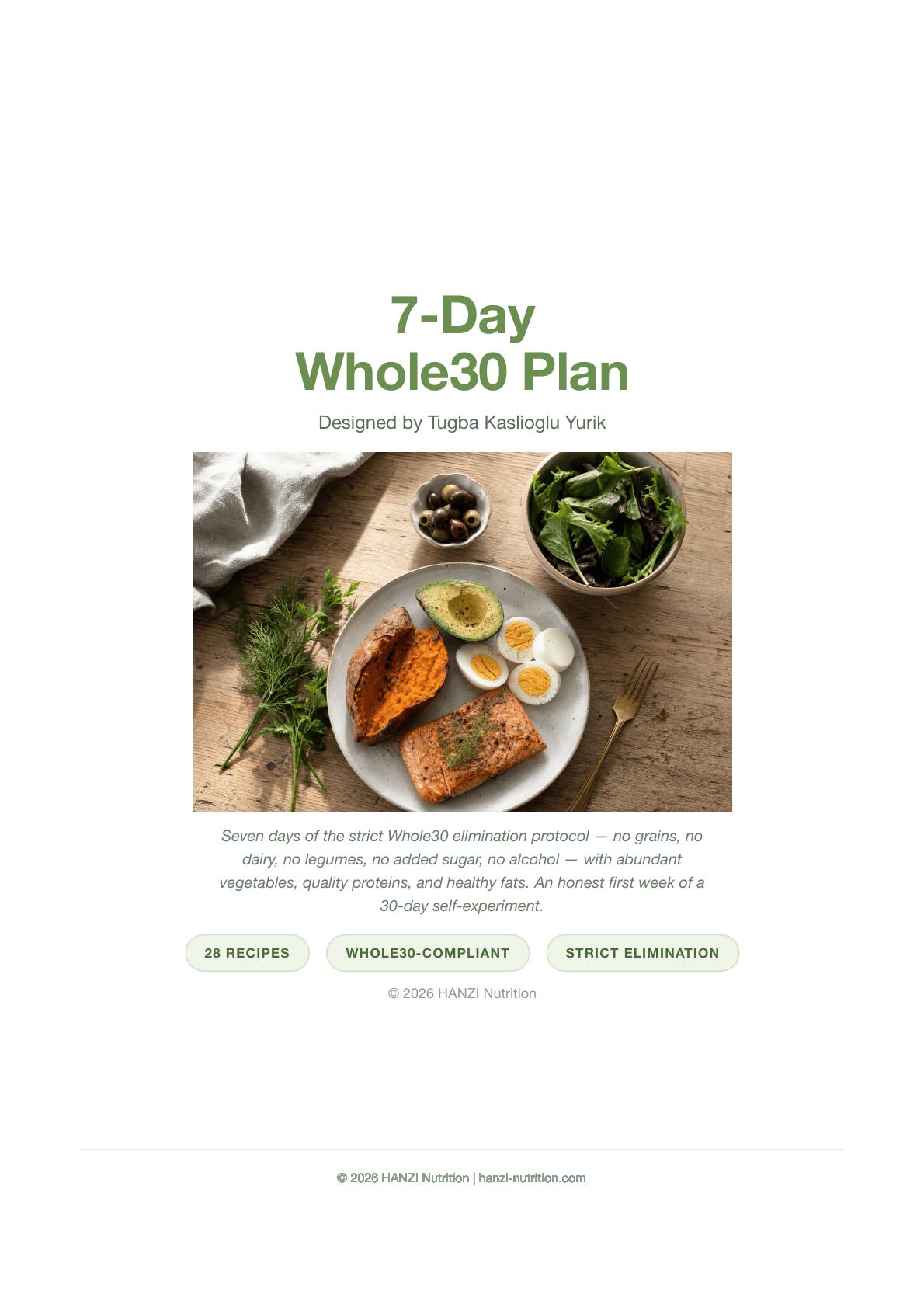
7-Day Whole30 Sampler Plan
A seven-day Whole30-aligned starter — no added sugar, no grains, no legumes, no ...
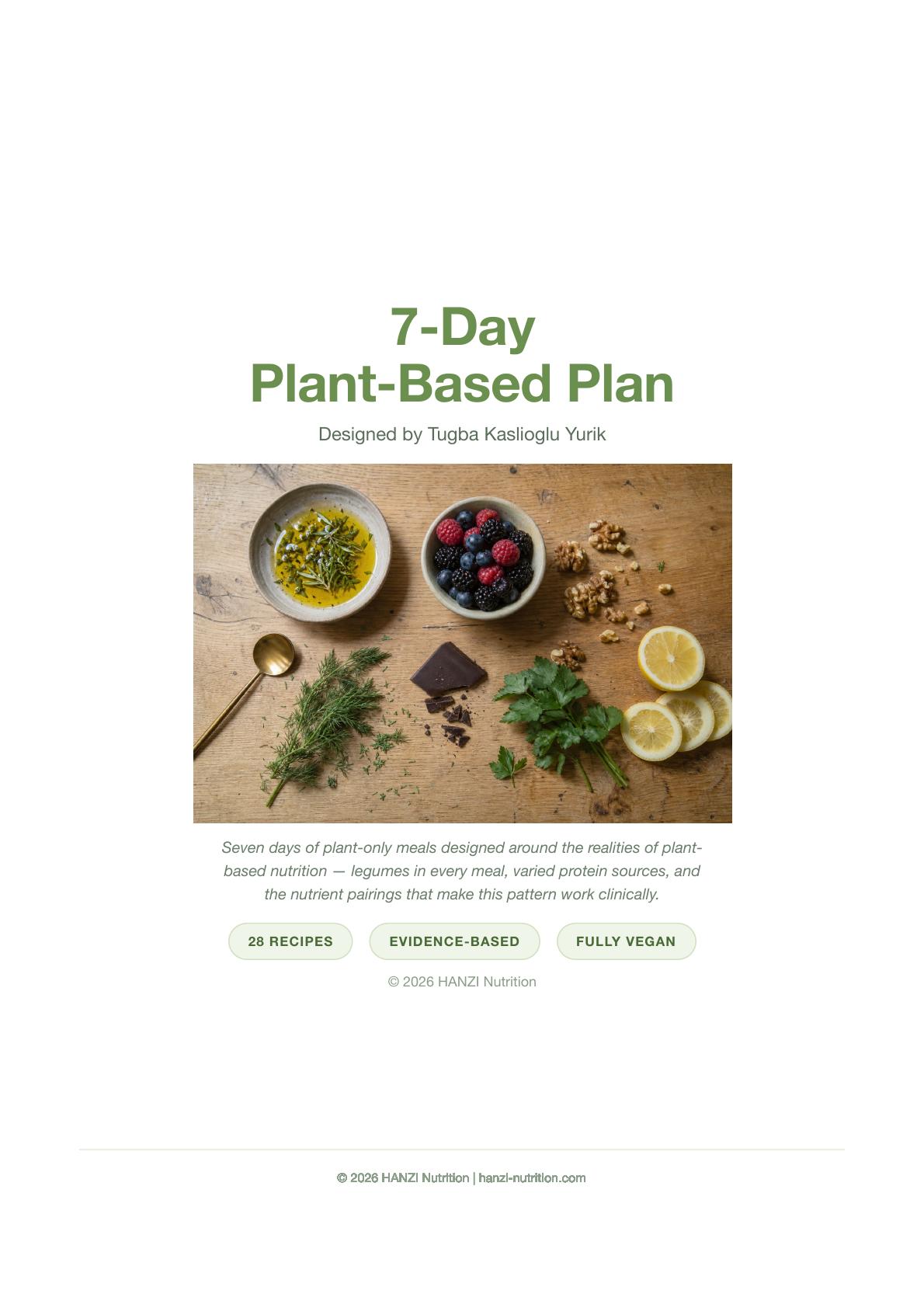
7-Day Plant-Based Plan
Seven days of whole-food plant-based eating — legumes, whole grains, leafy green...
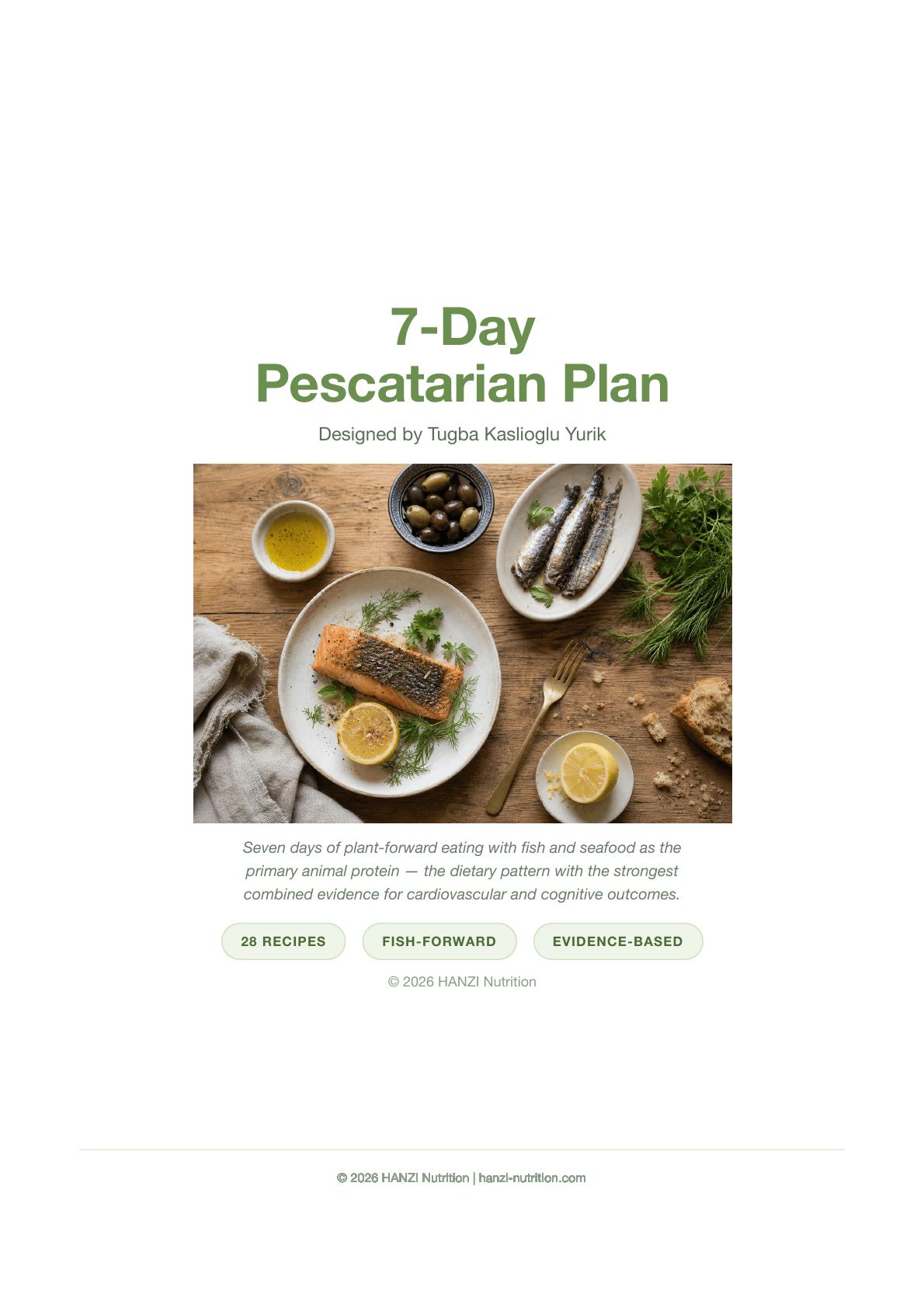
7-Day Pescatarian Plan
Seven days of fish-anchored, plant-forward eating. Omega-3-rich, plant-protein-s...
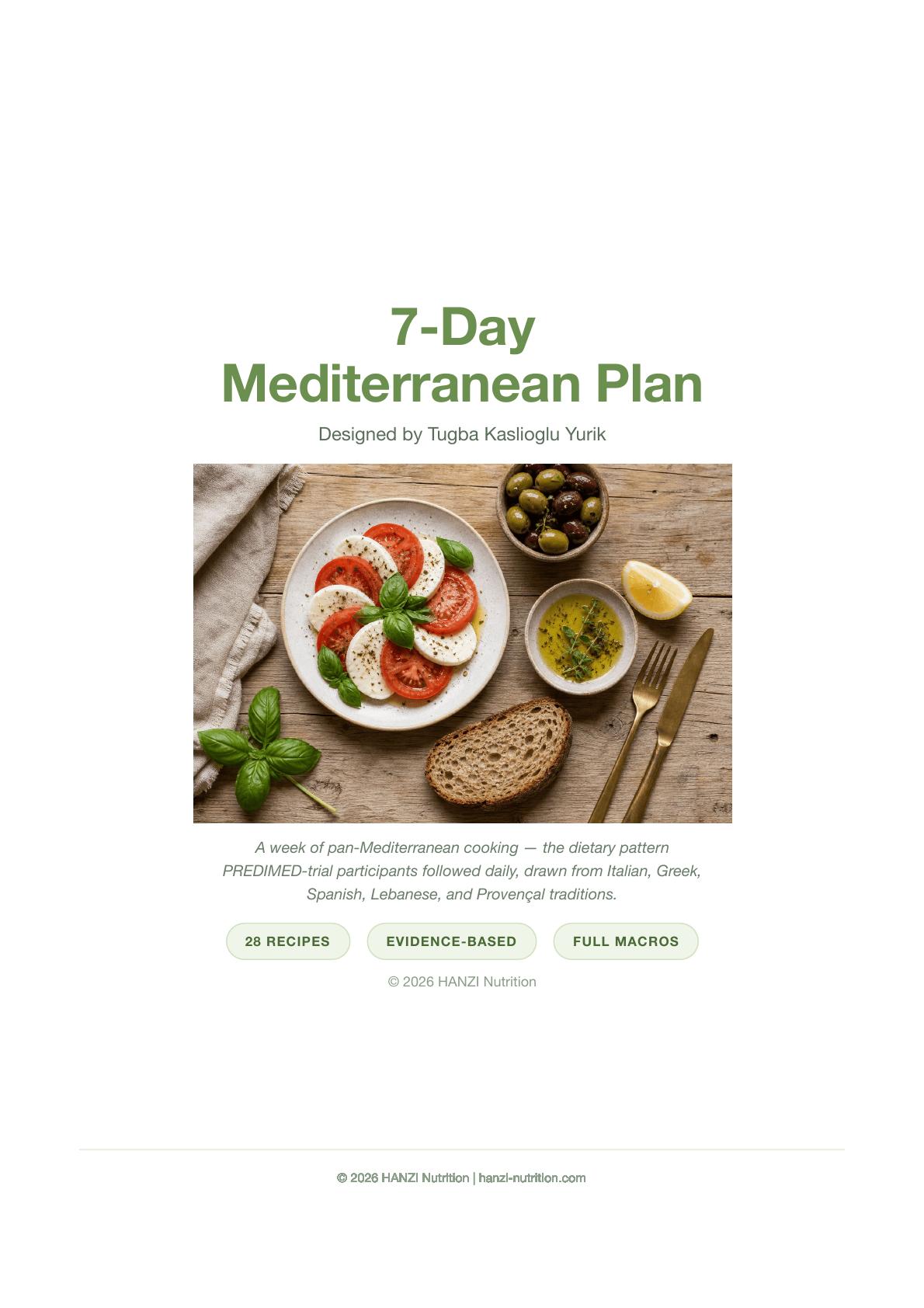
7-Day Mediterranean Plan
Seven days of Mediterranean-pattern eating — olive oil daily, fish twice weekly,...