
Digital Download
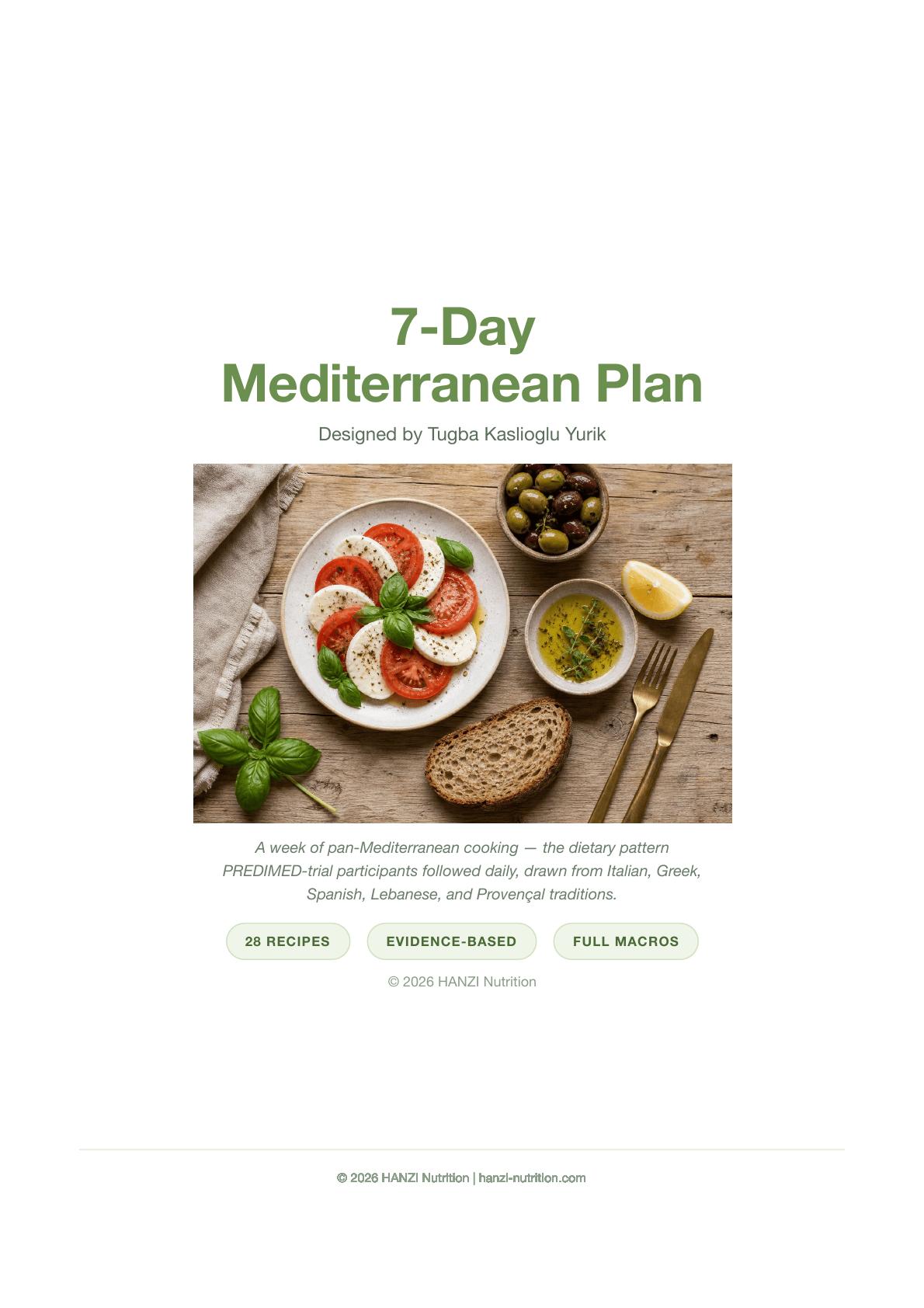
7-Day Mediterranean Plan
€3.99
Seven days of Mediterranean-pattern eating — olive oil daily, fish twice weekly, legumes most days, leafy greens at lunch and dinner. The most-researched dietary pattern in the world, in a one-week st...
1
Secure Payment
Instant Download
Satisfaction Guaranteed
What You'll Get
- Downloadable PDF (35 pages)
- 28 unique recipes (21 mains + 7 snacks)
- 7-day sample rotation
- Weekly shopping list
- Activity-Level Addendum (BMR + portion scaling)
- 4 cited references
From Tugba
There's a reason “eat like the Mediterranean” has stuck around for sixty years of nutrition research. It's not a diet in the marketing sense — it's a pattern of meals built around plants, olive oil, fish, and slow time at the table. This 7-day plan follows the dietary pattern PREDIMED-trial participants ate daily, drawn from across the Mediterranean: Italian, Greek, Spanish, Lebanese, and Provençal influences. Take what works for you; the pattern matters more than perfection.
— Tugba
Plan at a Glance
Daily macronutrient split
Fat — 30%
Protein — 20%
Carbs — 50%
Target: ~1,800 kcal/day — scaleable via the included Activity-Level Addendum.
28 RecipesEvidence-BasedFull Macros
Clinical Foundations
The evidence behind this plan, and what the data does and doesn't show
The Mediterranean dietary pattern — adopted across Spain, Italy, Greece, southern France, and the Levant — has been the subject of more high-quality nutritional research than nearly any other modern eating pattern. It centres olive oil as the primary fat source, prioritises plants (vegetables, legumes, whole grains, fruit, nuts), includes fish two or more times weekly, uses fermented dairy daily in moderate amounts, and treats red meat as occasional.
What the evidence supports
PREDIMED, a randomised trial in Spain with approximately 7,500 participants, demonstrated that a Mediterranean diet supplemented with extra-virgin olive oil (or nuts) reduced major cardiovascular events compared with a low-fat control diet (Estruch et al., 2013; reanalysis 2018). Subsequent observational and trial data also support associations with lower all-cause mortality, lower type-2 diabetes incidence, and modest cognitive benefits in older adults (Sofi et al., 2014).
What the evidence does not robustly support
The Mediterranean pattern is not a weight-loss intervention. People may lose weight when adopting it, but the cardiometabolic benefits documented in the literature are largely independent of body weight changes. Marketing claims about individual “superfoods” — olive oil alone, single supplements, specific “Mediterranean herbs” — don't survive controlled testing. The pattern is what matters.
This plan
Targets approximately 1,700 kcal/day with macros at roughly 50% carbohydrate / 20% protein / 30% fat. The 28 recipes draw from across the Mediterranean (Italian, Greek, Spanish, Lebanese, Provençal). Designed for general adult populations seeking a structured introduction to this dietary pattern. Individual responses vary; if a different dietary pattern fits your body and lifestyle better, that's clinical reality — pattern adoption matters more than any specific seven days.
⚠ Who this plan isn’t designed for
This plan isn't designed for: severe IBS or active low-FODMAP elimination phase (the plan includes onion, garlic, and legumes); tree nut allergy (multiple recipes feature almonds, walnuts, pine nuts, or pistachios); fish allergy (the plan includes at least two oily-fish meals weekly); pregnancy or breastfeeding without modification (energy needs and certain food cautions — e.g., raw or undercooked fish, soft cheeses, cured meats — require physician guidance).
If any of the above applies, please talk with your physician before starting this plan.
If any of the above applies, please talk with your physician before starting this plan.
Tips for Success
- Olive oil first. Use extra-virgin olive oil as your primary cooking fat. Recent research confirms its thermal stability even at higher temperatures.
- Legumes three times a week. Make lentils, chickpeas, or white beans the protein centerpiece of at least three meals.
- Two fish meals weekly, minimum. Aim for one oily fish (salmon, sardines, mackerel, anchovies) and one white fish across the week — the omega-3 dose drives much of the cardiovascular evidence.
- Fermented dairy daily, in moderation. Plain yogurt or kefir at one meal, a small portion of aged cheese at another — both support gut microbiome diversity.
- Build a fresh-herb habit. Basil, parsley, oregano, thyme, rosemary, mint — use them generously, both for flavour and for their bioactive compounds.
- Snack on whole foods. Olives, nuts, fresh or dried fruit, a small piece of cheese. Skip packaged “Mediterranean snacks” — most are ultra-processed.
- Eat slowly, share when possible. Mediterranean-style eating is as much about the rhythm of meals as the food itself.
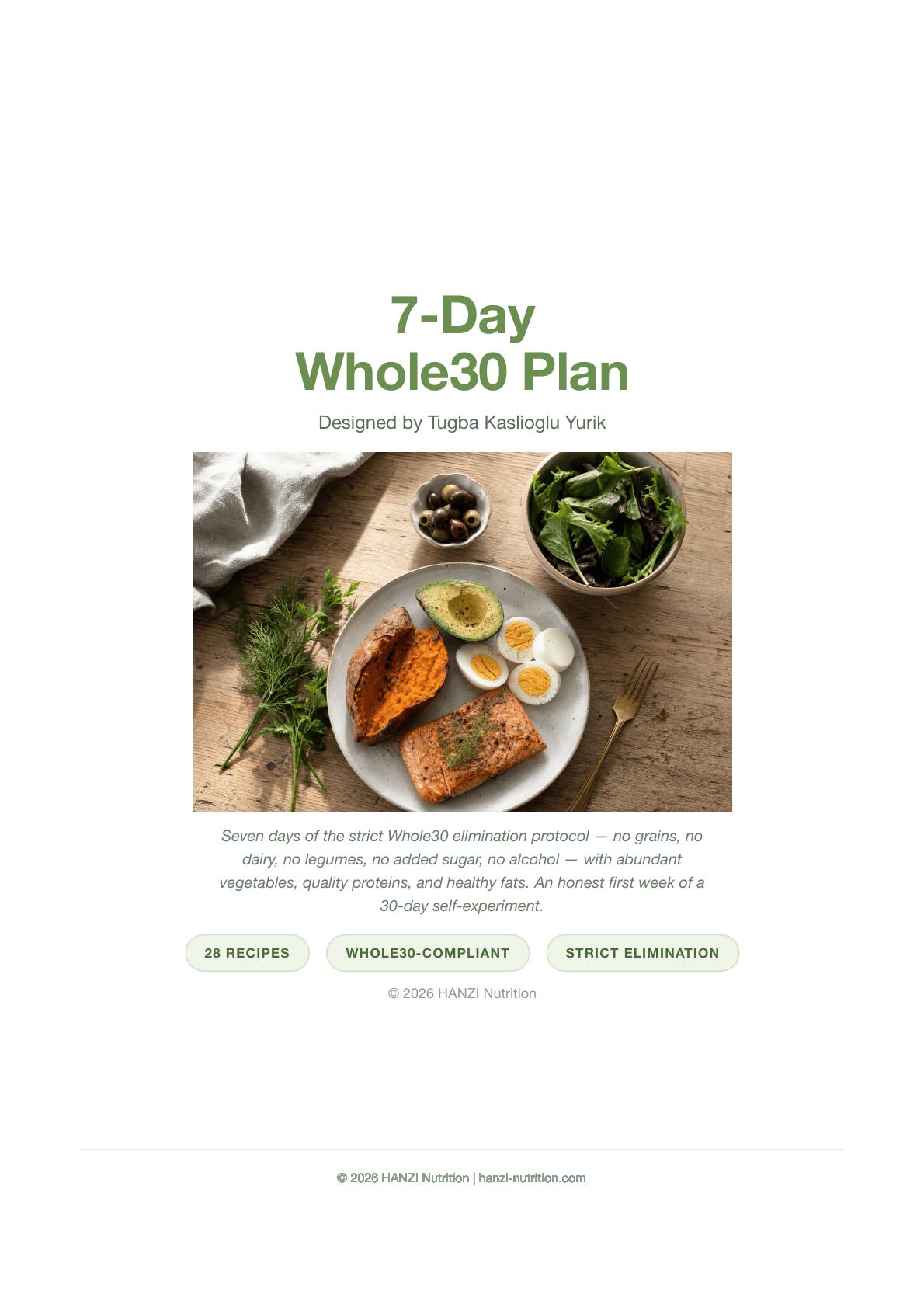
7-Day Whole30 Sampler Plan
A seven-day Whole30-aligned starter — no added sugar, no grains, no legumes, no ...
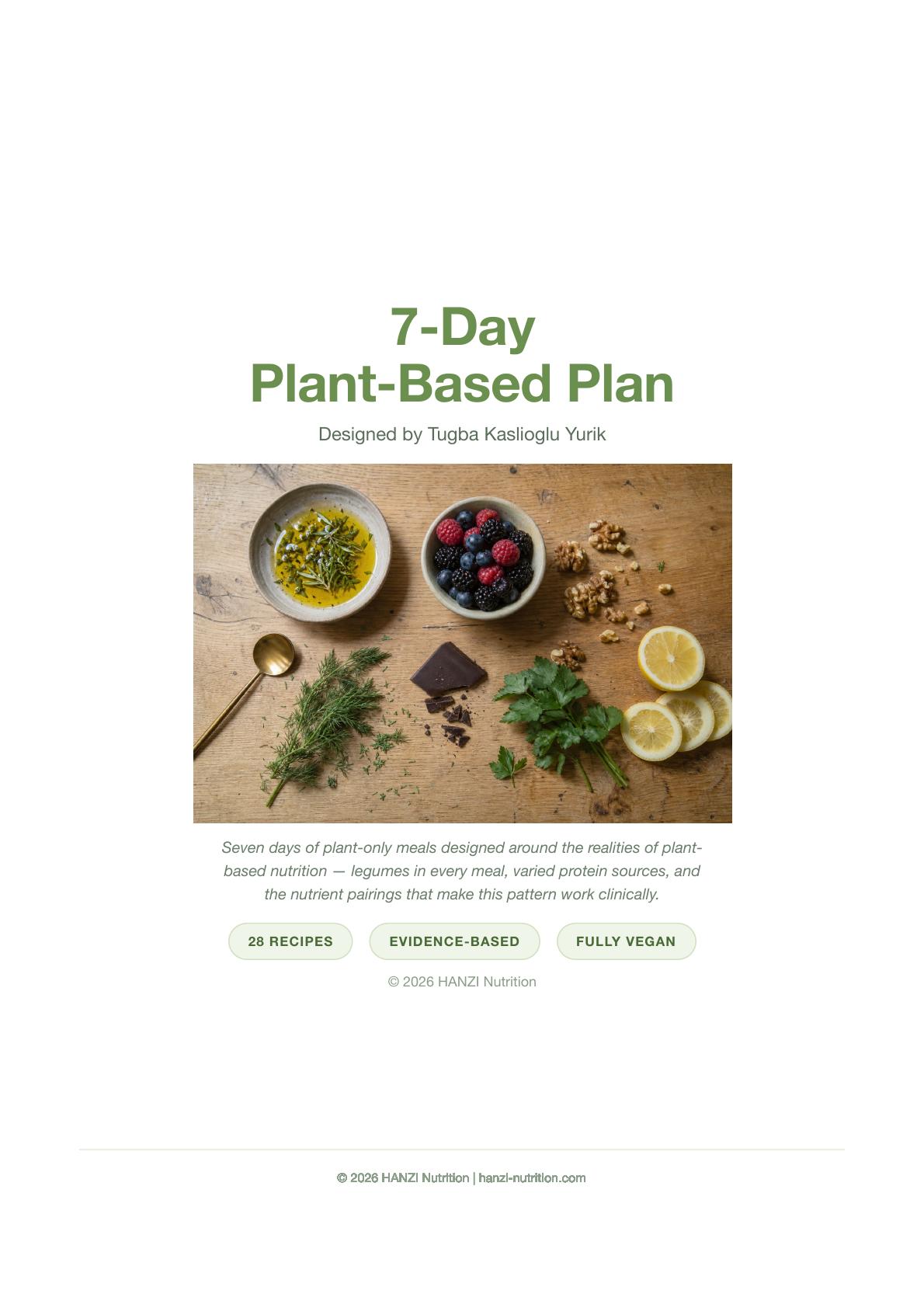
7-Day Plant-Based Plan
Seven days of whole-food plant-based eating — legumes, whole grains, leafy green...
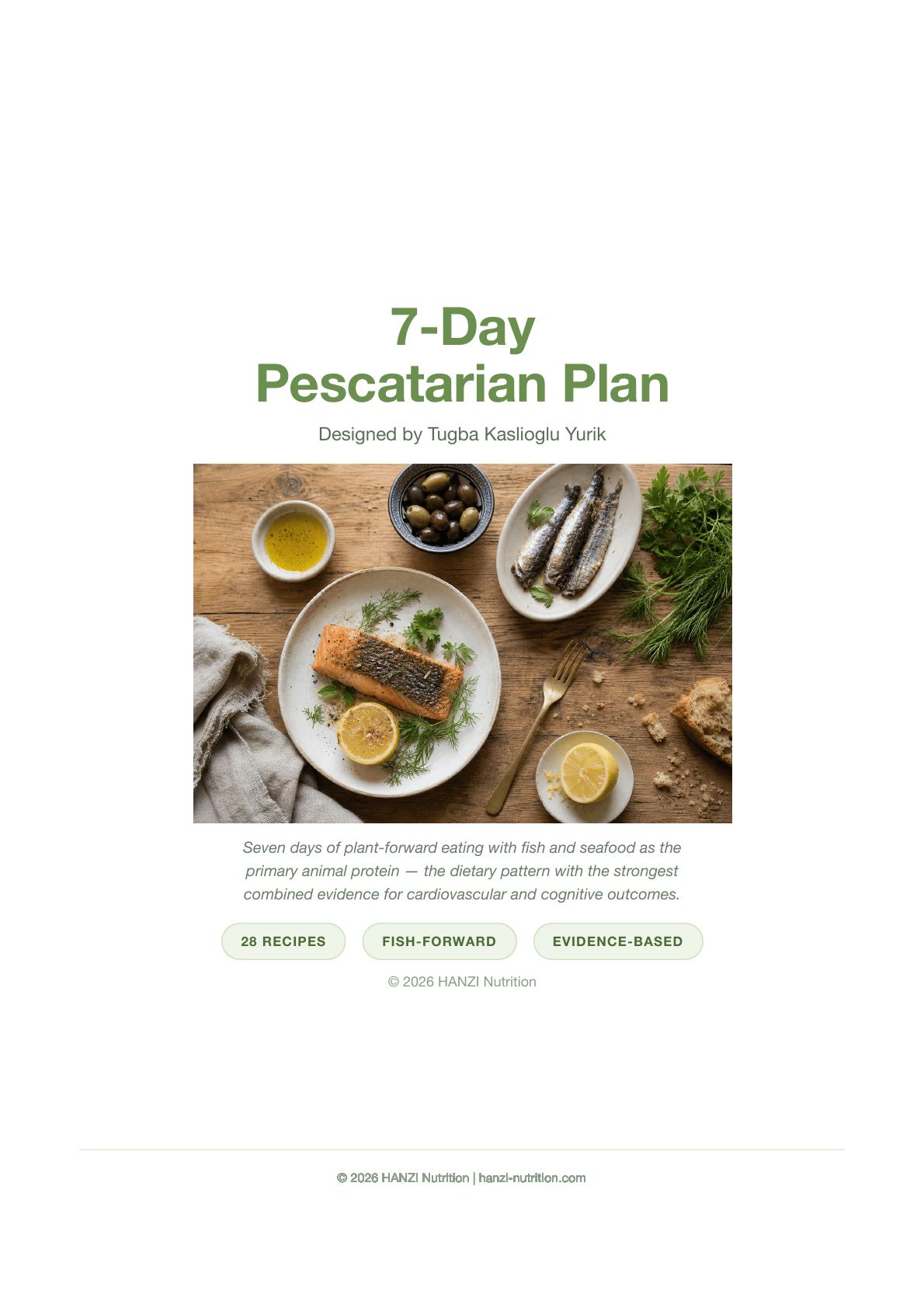
7-Day Pescatarian Plan
Seven days of fish-anchored, plant-forward eating. Omega-3-rich, plant-protein-s...
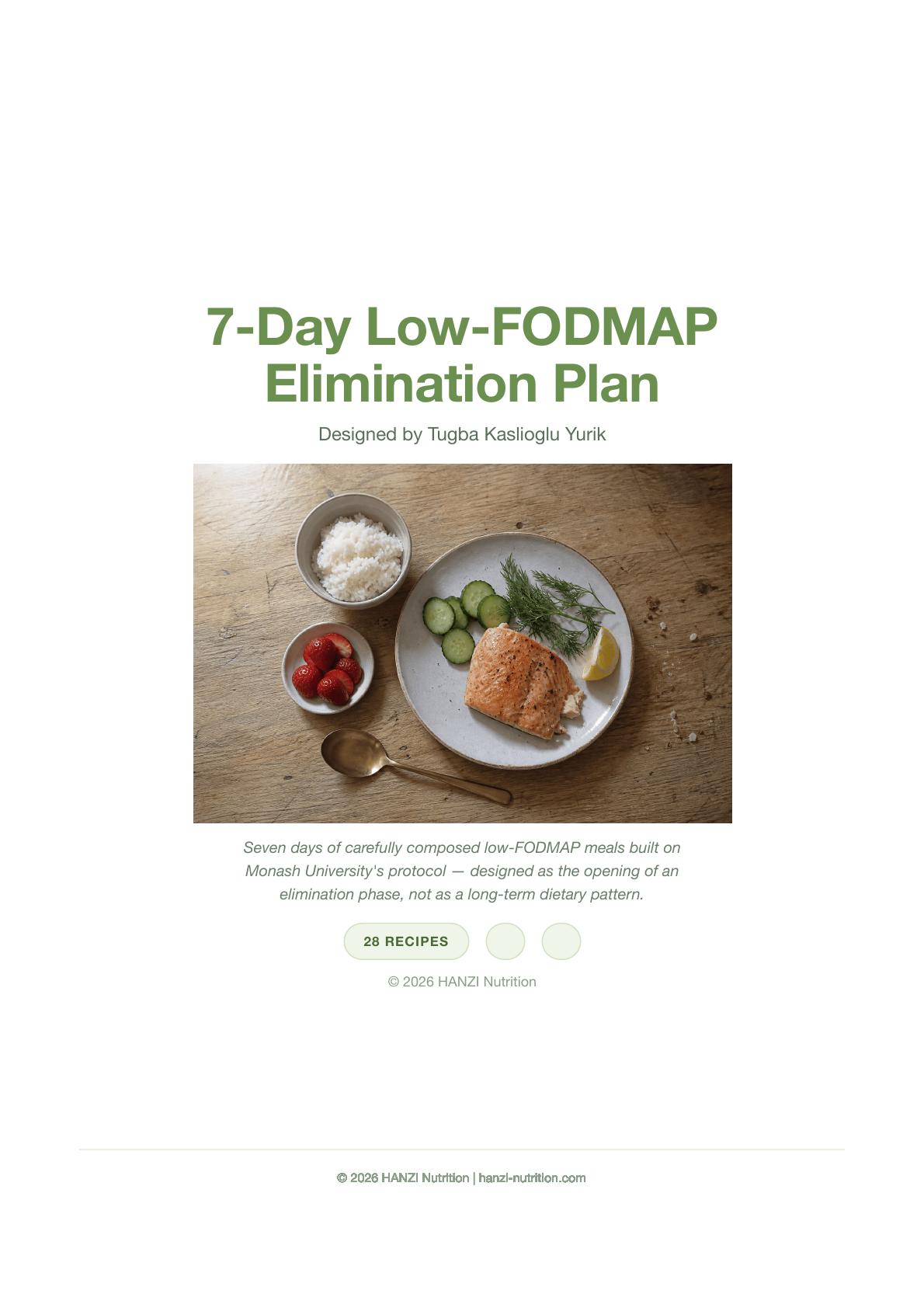
7-Day Low-FODMAP Plan
Seven days of Monash-aligned low-FODMAP eating for IBS-prone digestive systems. ...