
FeaturedDigital Download
7-Day Intermittent Fasting 16:8 Plan
€3.99
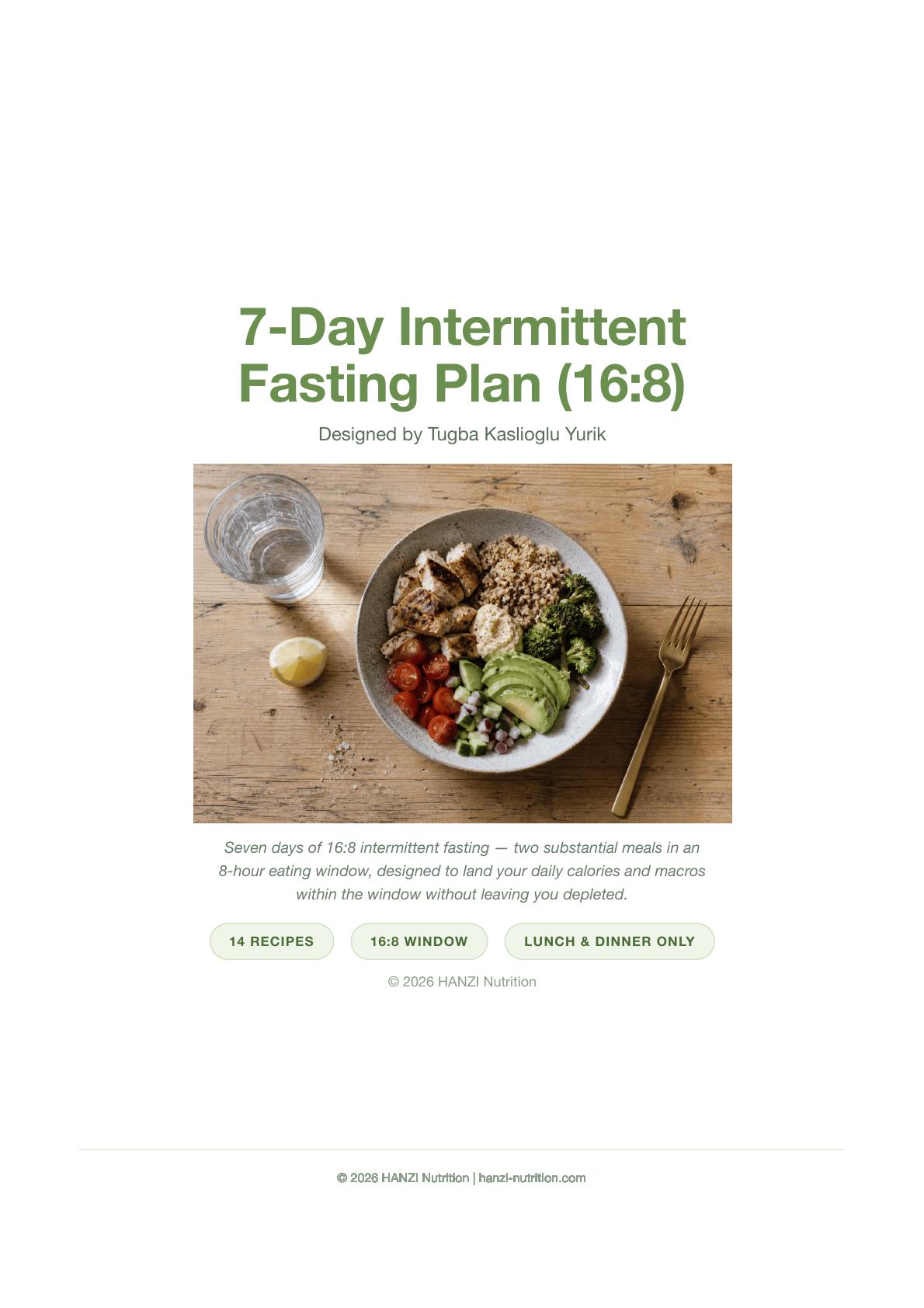
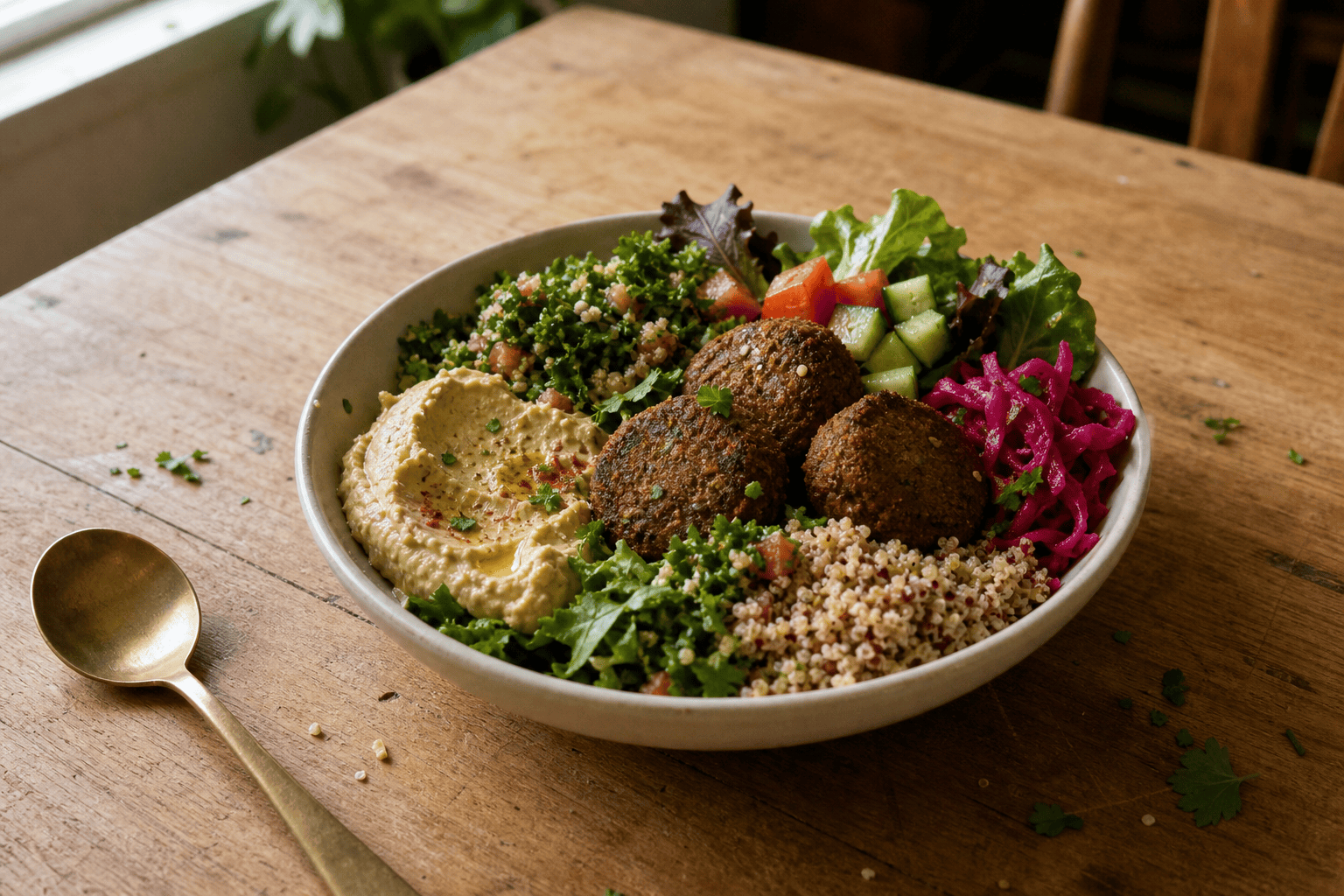
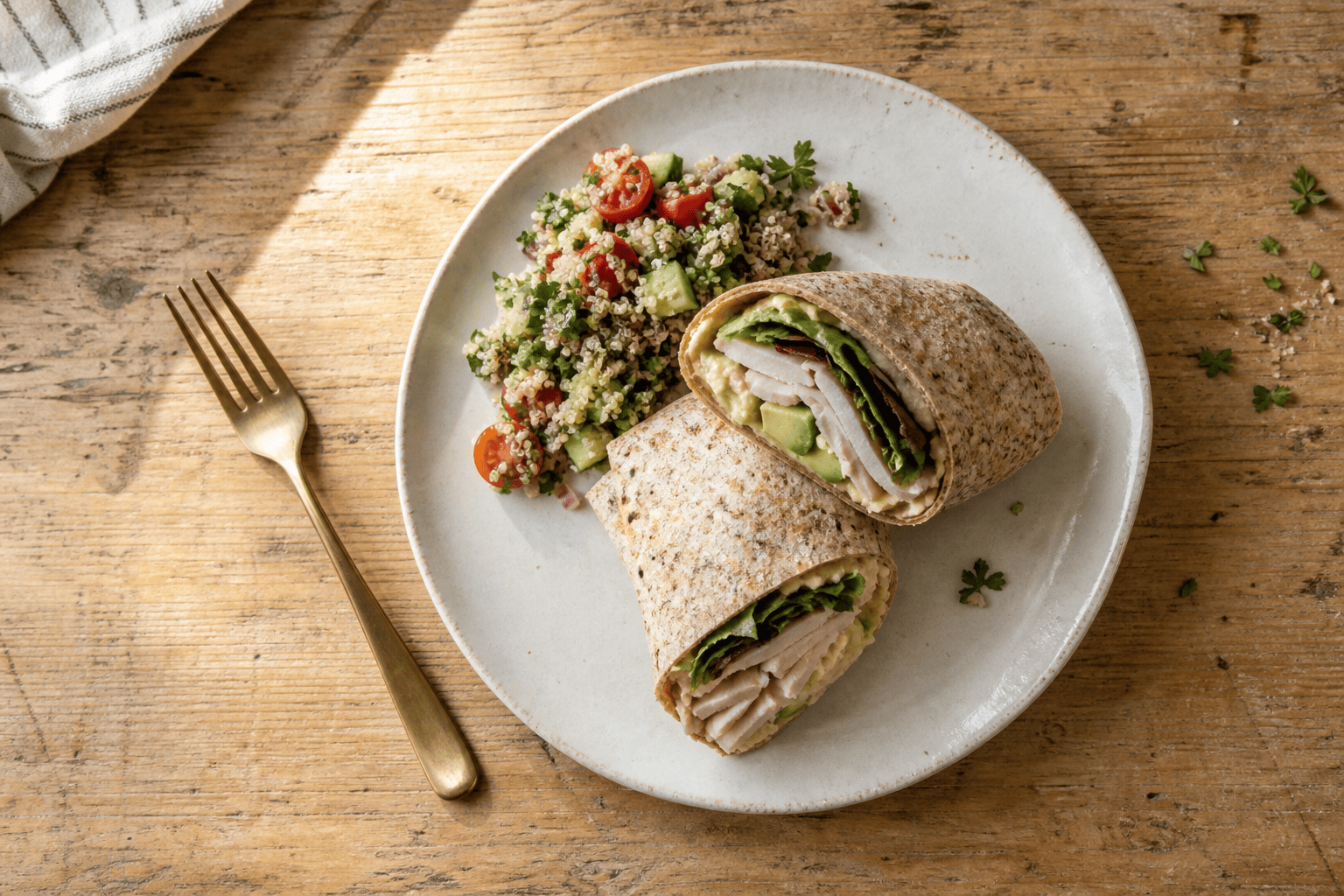
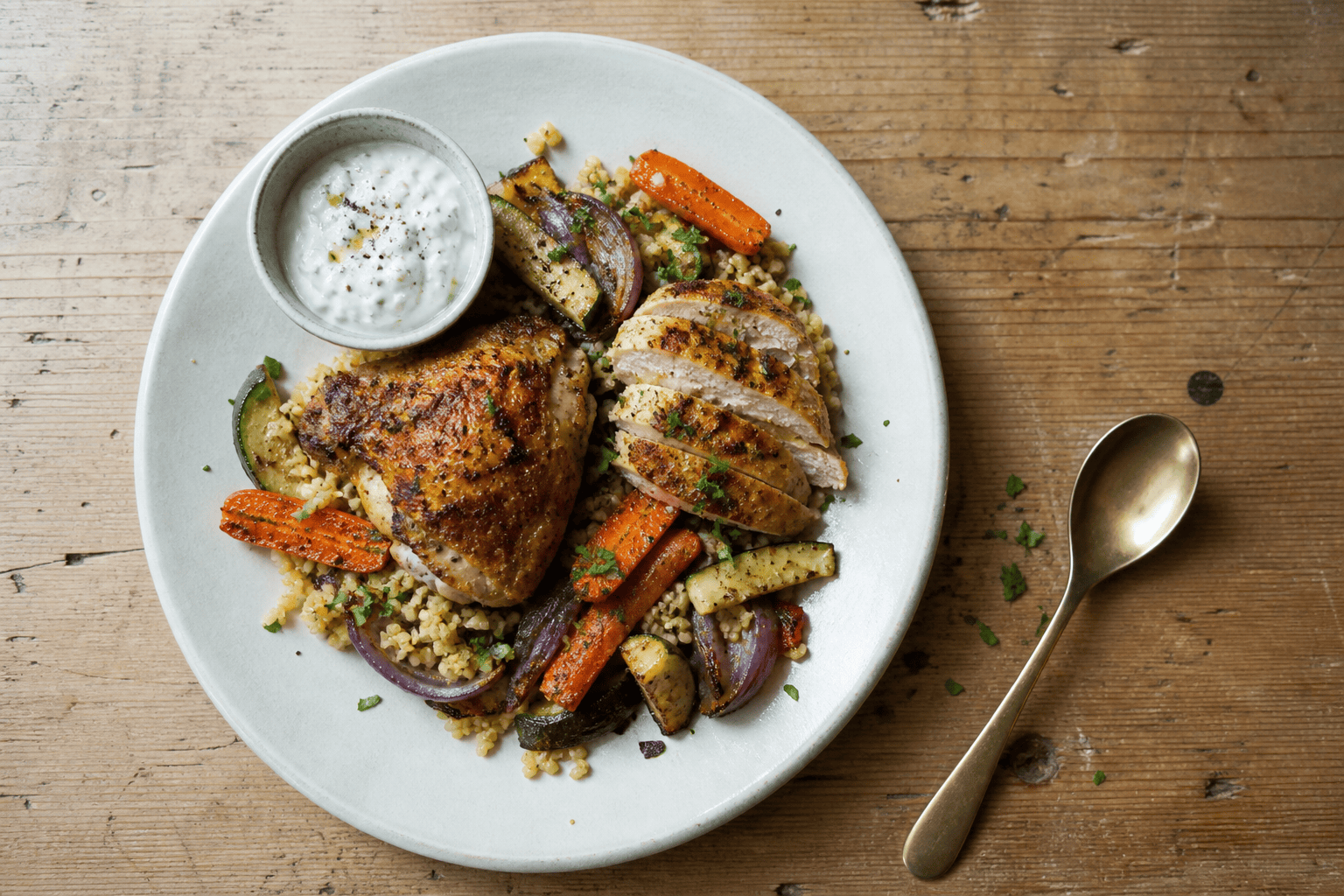
Seven days of 16:8 time-restricted eating — substantial, satisfying meals concentrated between 12:00 and 20:00. Mediterranean-pattern foods inside the window; no calorie panic, no detox theatrics.
1
Secure Payment
Instant Download
Satisfaction Guaranteed
What You'll Get
- Downloadable PDF (27 pages)
- 14 unique recipes (14 mains + 0 snacks)
- 7-day sample rotation
- Weekly shopping list
- Activity-Level Addendum (BMR + portion scaling)
- 4 cited references
From Tugba
Intermittent fasting is a schedule, not a magic diet. You eat the same kinds of foods you'd eat otherwise; you just compress them into an 8-hour window. The most common version — the one this plan uses — is 16:8: 16 hours of fasting (mostly while you sleep) and 8 hours of eating, typically noon to 8 PM. The benefits the literature documents are largely about caloric reduction and circadian timing, not the fasting itself doing something special. If 16:8 makes the rest of your eating easier, it works for you. If it leaves you ravenous and irritable, it doesn't. There's no virtue in suffering.
— Tugba
Plan at a Glance
Daily macronutrient split
Fat — 30%
Protein — 25%
Carbs — 45%
Target: ~1,700 kcal/day — scaleable via the included Activity-Level Addendum.
14 Recipes16:8 WindowLunch & Dinner Only
Clinical Foundations
The evidence behind this plan, and what the data does and doesn't show
Time-restricted eating (TRE) compresses daily food intake into a shorter window, leaving an extended fasting period. The 16:8 version — a 16-hour fast, an 8-hour eating window — is the most-studied form. During the fast you can drink water, plain coffee, plain tea. During the window you eat normally; this plan delivers two substantial meals (lunch at ~12 PM, dinner at ~7-8 PM).
What the evidence supports
Multiple randomised trials show that time-restricted eating can produce modest weight loss and improvements in glucose regulation and lipid markers (Varady et al., 2022; Sutton et al., 2018). Most of the effect appears to come from reduced total caloric intake rather than fasting itself, though early time-restricted eating (eating earlier in the day) may have additional circadian benefits.
What the evidence does not robustly support
Time-restricted eating is not a magic metabolic switch. Head-to-head trials against unrestricted eating with the same calories show roughly equivalent outcomes (Lowe et al., 2020). It does not preserve muscle better than calorie matching alone; if anything, narrow eating windows make adequate protein intake harder. It is not appropriate for everyone — particularly people with a history of disordered eating, type-1 diabetes, or growing bodies.
This plan
Targets ~1,700 kcal/day with macros at roughly 45% carbohydrate / 25% protein / 30% fat, delivered in two meals: lunch at the open of the 12 PM–8 PM eating window, and dinner around 6–8 PM. Each meal is substantial (~850 kcal) and protein-anchored to clear the leucine threshold. If two meals leave you under-fed, add a small protein-dense snack within the window — this plan won't tell you to suffer through it.
⚠ Who this plan isn’t designed for
This plan isn't designed for: type-1 diabetes or insulin-dependent type-2 diabetes (fasting changes insulin needs and can precipitate hypoglycaemia); history of disordered eating (time-restricted eating can become a vehicle for restriction); pregnancy or breastfeeding (energy needs are higher and more consistent); children and adolescents (growing bodies need consistent fuelling); underweight or recovering from illness; medication regimes that require taking pills with food; shift workers whose schedules don't align with a 12–8 PM window (you can shift the window, but pick one that fits your sleep).
If any of the above applies, please talk with your physician before starting this plan.
If any of the above applies, please talk with your physician before starting this plan.
Tips for Success
- Plain water, coffee, or tea only during the fast. Cream, sugar, milk, or sweeteners technically end the fast. Most clinical benefits come from compressing eating to the window; a single splash of cream isn't a disaster.
- Open the window with protein and fibre. Your first meal sets the day's hunger trajectory. A protein-anchored lunch (chicken, fish, eggs, legumes + vegetables) lands better than a carb-heavy one.
- Don't make up calories elsewhere. If 1,700 kcal in 8 hours feels like too little or too much, adjust portions, not the window. The window is the discipline; the calories are the lever.
- Hydrate aggressively during the fast. Thirst masquerades as hunger. Aim for 2–3 cups of plain water in the morning before the window opens.
- Shift the window if 12–8 doesn't fit. Early TRE (e.g., 10–6) has marginally better circadian evidence. Late TRE (1–9) is fine if it fits your life. Consistent timing matters more than which hours.
- Two substantial meals can mean one snack. If the gap from lunch to dinner is too long, a small protein-dense snack inside the window is fine. Don't graze across the whole window.
- Stop if your body is fighting it. Persistent fatigue, mood crashes, sleep disruption, or food preoccupation are signals that 16:8 isn't the right tool for you. Plenty of other dietary patterns work.
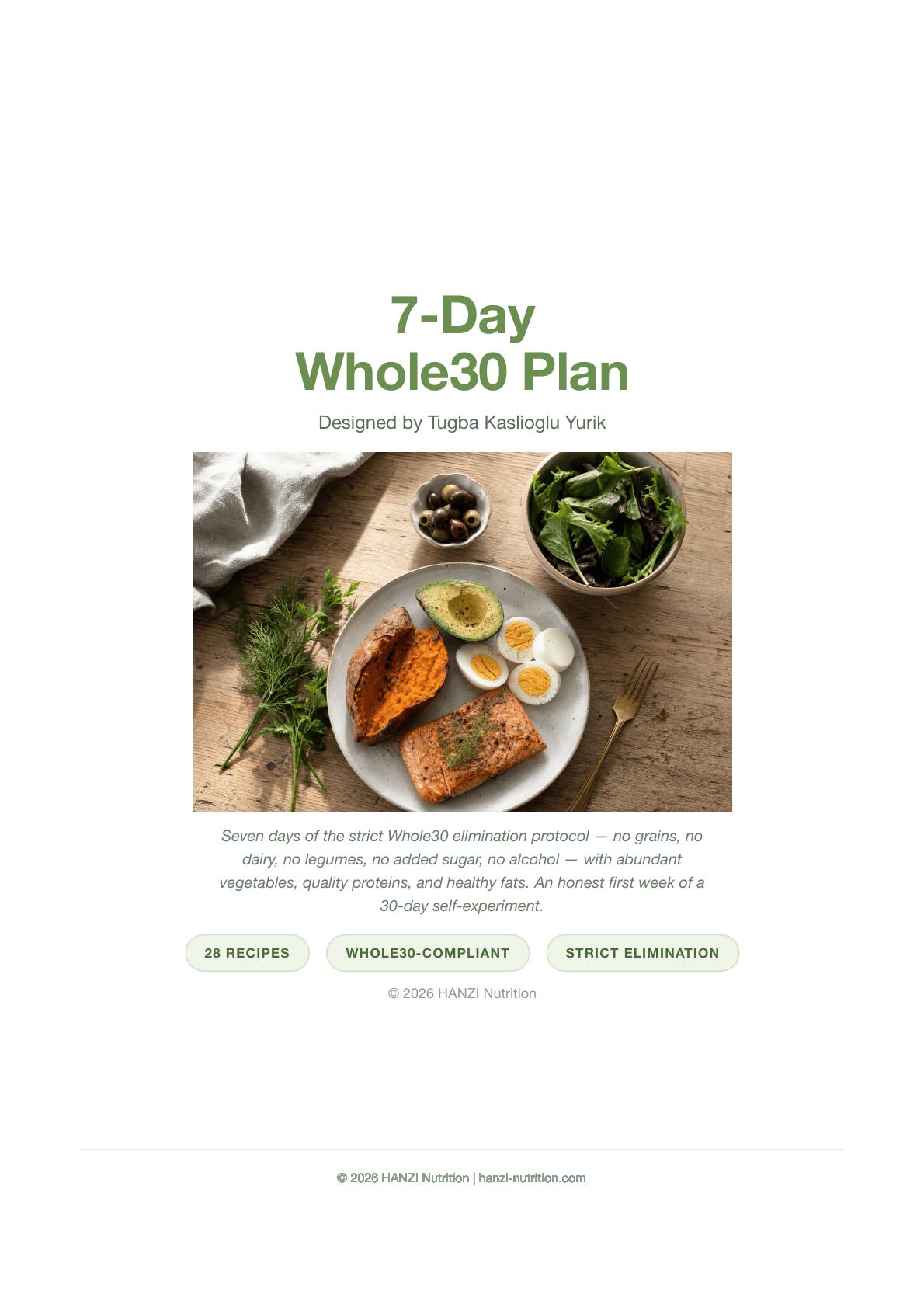
7-Day Whole30 Sampler Plan
A seven-day Whole30-aligned starter — no added sugar, no grains, no legumes, no ...
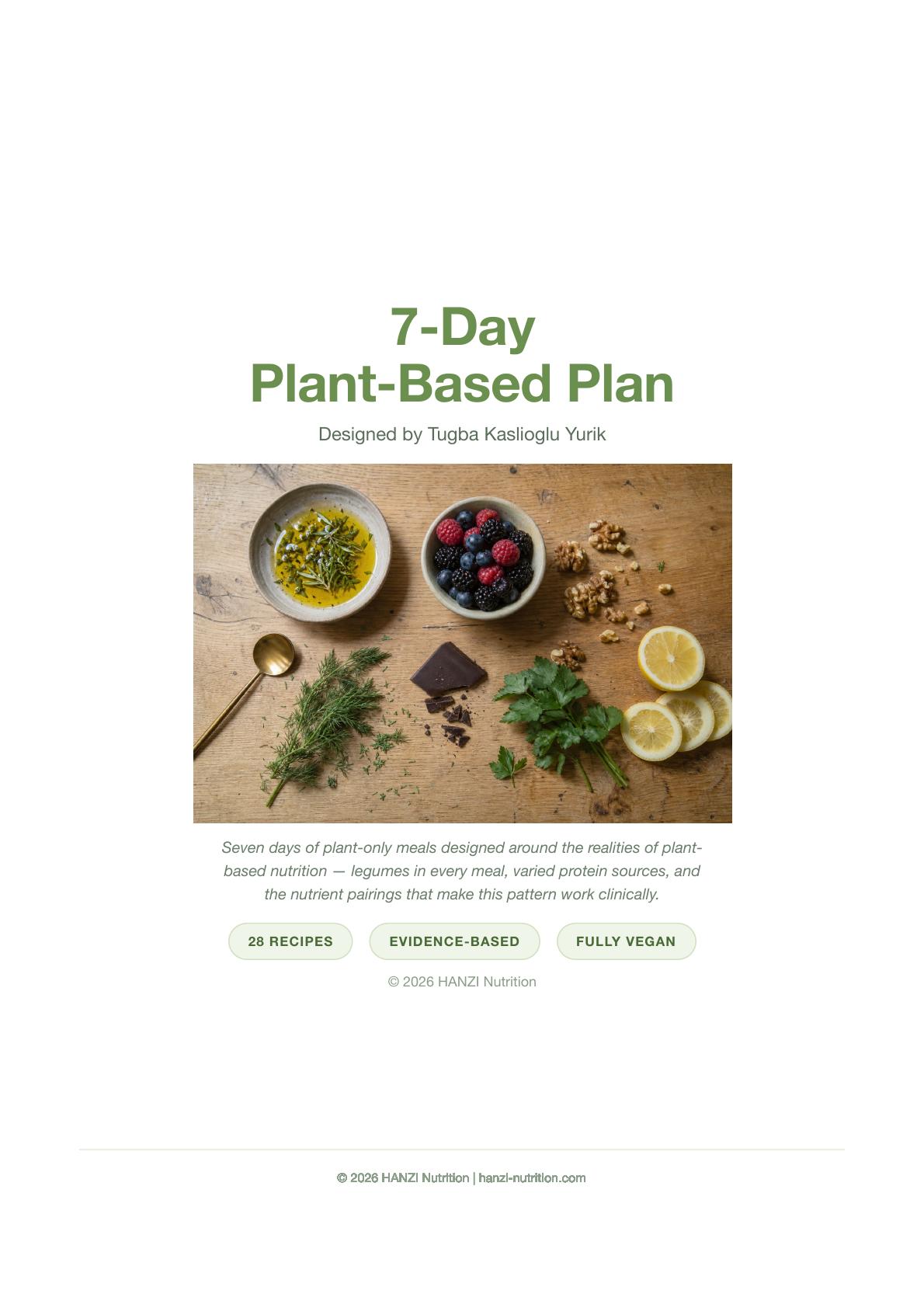
7-Day Plant-Based Plan
Seven days of whole-food plant-based eating — legumes, whole grains, leafy green...
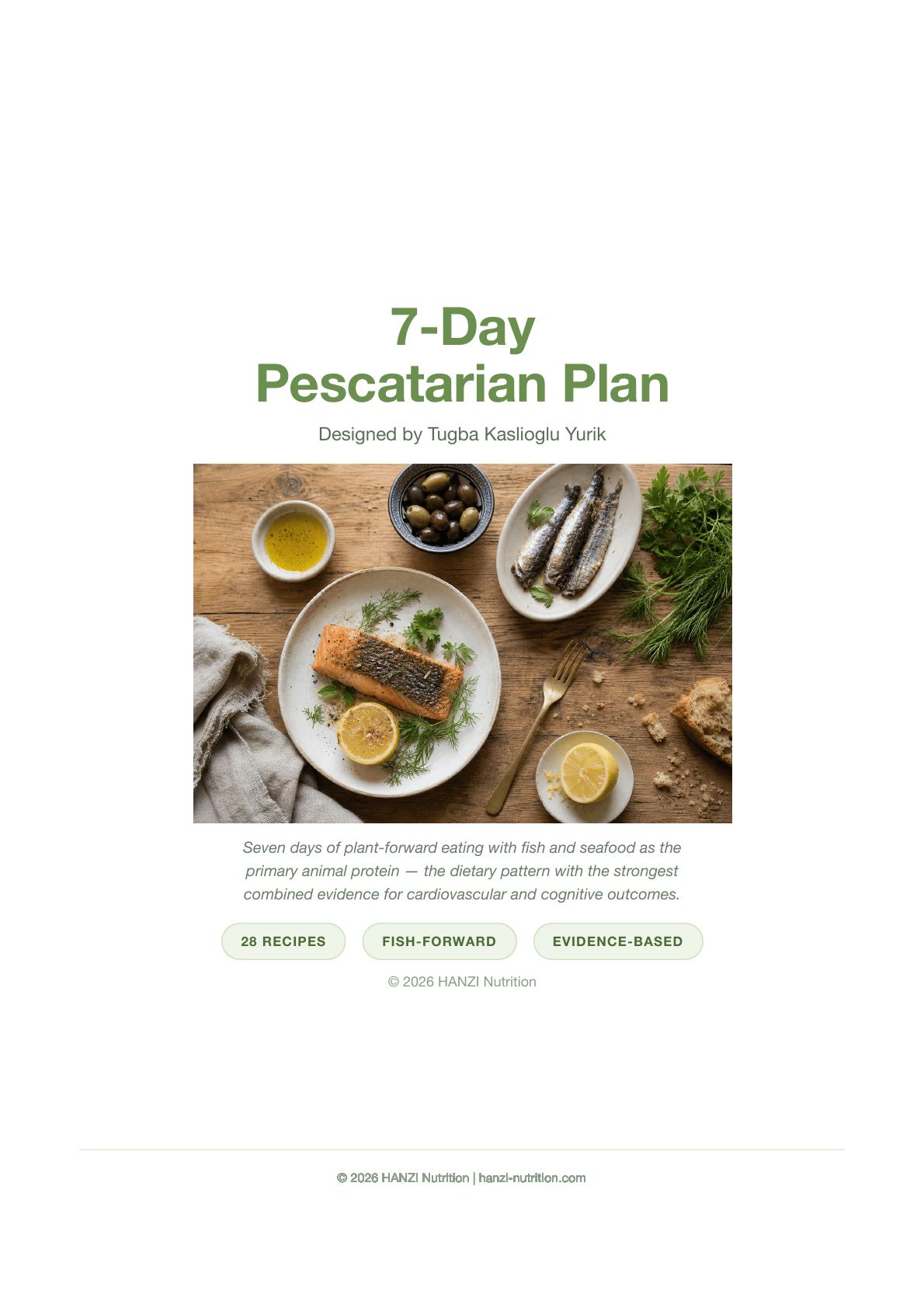
7-Day Pescatarian Plan
Seven days of fish-anchored, plant-forward eating. Omega-3-rich, plant-protein-s...
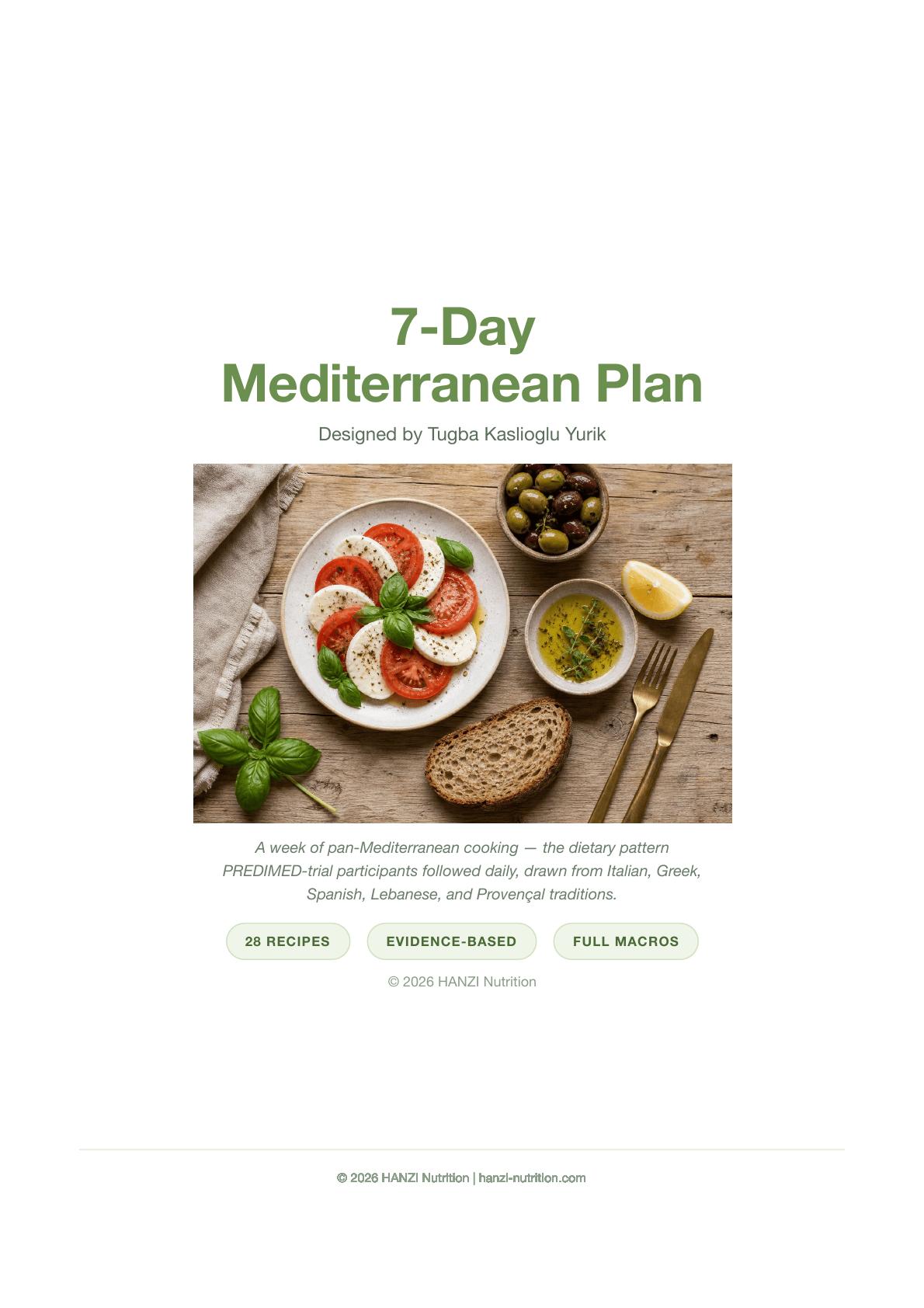
7-Day Mediterranean Plan
Seven days of Mediterranean-pattern eating — olive oil daily, fish twice weekly,...