FeaturedDigital Download
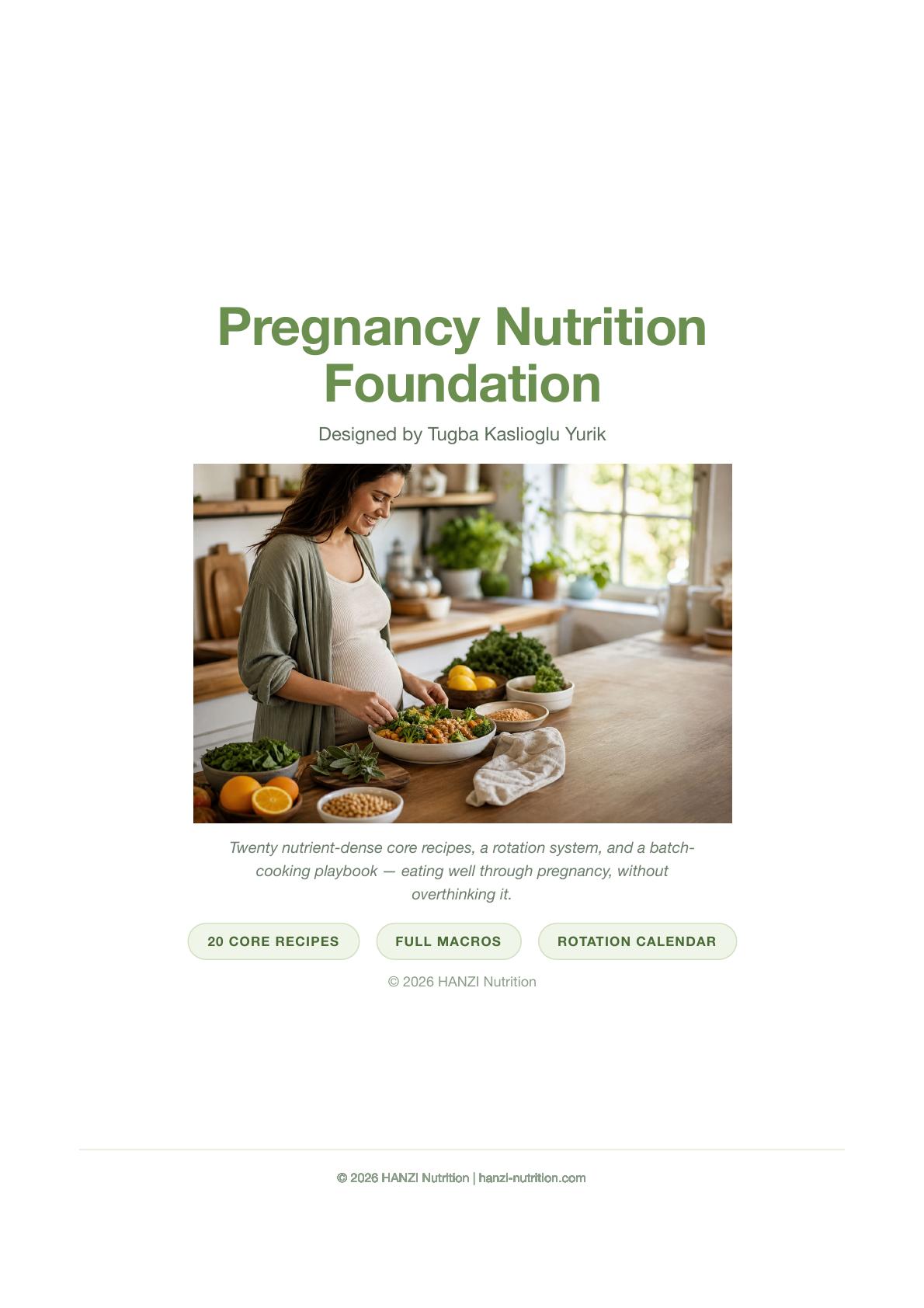
Pregnancy Nutrition Foundation
€7.99
A 4-week rotation plan built around 20 nutrient-dense core recipes — six breakfasts, seven lunches, seven dinners — chosen for key pregnancy nutrients: folate, iron, calcium, DHA, and protein. It incl...
1
Secure Payment
Instant Download
Satisfaction Guaranteed
What You'll Get
- Downloadable PDF (34 pages)
- 20 unique recipes (20 mains + 0 snacks)
- 0-day sample rotation
- Weekly shopping list
- 5 cited references
From Tugba
If you are reading this, you are likely somewhere in the middle of one of the bigger changes a body goes through — and being told, from every direction, what you should and should not eat. My aim with this plan is narrower and, I hope, calmer than all of that. It is a set of everyday meals built around the nutrients that matter in pregnancy — folate, iron, calcium, the long-chain fats, enough protein — assembled so you can actually cook them on a tired evening or a queasy morning.
What this plan is: a sustainable rotation of nourishing food, gentle enough for early-pregnancy nausea and scalable as your appetite returns. What it is not: antenatal care. It does not replace your midwife, your OB, your booking bloods, or the supplement advice you have been given — folic acid and vitamin D in particular are things to take as prescribed, not something a meal plan can stand in for. I have written this as general guidance for a healthy pregnancy; if anything about yours has been flagged as needing closer monitoring, this plan is a conversation to have with your care team, not a substitute for it.
Eat what stays down. Be kind to yourself on the days nothing appeals. The recipes will still be here when you feel more like yourself.
What this plan is: a sustainable rotation of nourishing food, gentle enough for early-pregnancy nausea and scalable as your appetite returns. What it is not: antenatal care. It does not replace your midwife, your OB, your booking bloods, or the supplement advice you have been given — folic acid and vitamin D in particular are things to take as prescribed, not something a meal plan can stand in for. I have written this as general guidance for a healthy pregnancy; if anything about yours has been flagged as needing closer monitoring, this plan is a conversation to have with your care team, not a substitute for it.
Eat what stays down. Be kind to yourself on the days nothing appeals. The recipes will still be here when you feel more like yourself.
— Tugba
Plan at a Glance
Daily macronutrient split
Fat — 30%
Protein — 25%
Carbs — 45%
20 Core RecipesFull MacrosRotation Calendar
Clinical Foundations
The evidence behind this plan, and what the data does and doesn't show
Pregnancy raises the body's requirement for several nutrients well before it raises its requirement for energy. Folate supports the early formation of the neural tube, which is why national guidance recommends a folic acid supplement before conception and through the first trimester; food sources — leafy greens, legumes, fortified grains — sit alongside that supplement, not in place of it. Iron requirements rise as maternal blood volume expands, and iron from food is absorbed better in the presence of vitamin C. Calcium and vitamin D are drawn on for fetal skeletal development, and the long-chain omega-3 fat DHA — found in low-mercury oily fish — is associated with fetal brain and eye development, particularly in the third trimester. Protein needs increase modestly across pregnancy as maternal and fetal tissue is built.
⚠ Who this plan isn’t designed for
This plan is general nutrition guidance for a healthy pregnancy — it is not a substitute for antenatal care, and it is not designed for pregnancies that need closer clinical management. Please use it only alongside your care team, and follow their advice over this plan, if you have gestational diabetes (which needs a clinician-adjusted plan with monitored carbohydrate intake), hyperemesis gravidarum or severe persistent vomiting, pre-eclampsia or raised blood pressure, a multiple pregnancy (twins or more, where energy and nutrient needs differ), or any pregnancy that has been flagged as high-risk. If you have a pre-existing medical condition, a history of disordered eating, or significant food allergies, raise this plan with your midwife or doctor before starting it. Work with your OB or midwife — this plan supports their guidance, it does not replace it.
If any of the above applies, please talk with your physician before starting this plan.
If any of the above applies, please talk with your physician before starting this plan.
Tips for Success
- Take your supplements as prescribed. Folic acid and vitamin D in particular are recommended in pregnancy and a meal plan does not replace them — food works alongside them.
- Eat little and often, especially early on. Small frequent meals and snacks are gentler on first-trimester nausea and on late-pregnancy heartburn than three large plates.
- Pair iron-rich foods with vitamin C. A squeeze of lemon, some tomato, or a pepper alongside lentils, beans or red meat helps your body absorb the iron.
- Keep plain, easy foods on hand for bad days. Dry wholegrain toast, crackers, bananas and plain porridge are worth having in the cupboard for when nothing else appeals — eating something gentle beats eating nothing.
- Stay hydrated. Fluid needs rise in pregnancy; keep water within reach, and sip steadily rather than waiting until you are thirsty.
- Wash produce and store food carefully. Rinse all fruit, vegetables and salad, keep your fridge cold, and reheat leftovers until piping hot — see the Food Safety section.
- Scale the meals to your trimester, do not restrict. Use the Trimester Guide to add energy as your needs rise; pregnancy is not the time for weight-loss eating.
- Batch-cook on your good days. Energy comes and goes through pregnancy — when you have some, build up the freezer for the days and weeks when you will not.