A trimester-by-trimester pregnancy nutrition plan from a dietitian — key nutrients, nausea tips, food safety, a sample day, and when to get support.
When clients first ask me to help build a pregnancy nutrition plan, they often expect a long list of forbidden foods and a strict schedule. What they actually need is the opposite: a calm, flexible framework that meets their changing needs across nine months, works alongside their midwife or OB, and leaves room for the very real ups and downs of pregnancy — the nausea, the food aversions, the days when toast is the only thing that stays down. As a dietitian, my job is not to hand you a rigid diet. It is to help you nourish yourself and your baby in a way that is realistic, evidence-informed, and kind.
This guide walks through what your body needs in each trimester, the key nutrients worth understanding, how to manage common symptoms, simple food-safety basics, and a sample day you can adapt. It is general education, not personal medical advice, and it is meant to complement — never replace — the care you receive from your healthcare provider.
Why a Pregnancy Nutrition Plan Looks Different Each Trimester
Pregnancy is not one nutritional phase but three, each with its own demands. A good pregnancy nutrition plan flexes accordingly rather than asking you to eat the same way from conception to delivery.
In the first trimester, your calorie needs barely change. Many people are surprised by this. The early weeks are about laying foundations — neural tube development, the placenta forming — so nutrient quality matters far more than quantity. This is also when nausea and aversions often peak, so the practical goal is simply to keep something nourishing going in.
In the second trimester, appetite usually returns and energy needs rise modestly — often quoted as roughly 300–350 extra calories a day, though this is a general figure and your provider may individualise it. This is a comfortable window to focus on steady, balanced meals and to build iron and calcium stores.
In the third trimester, the baby grows quickly and your stomach has less room. Energy needs rise a little more (commonly cited as around 450 extra calories a day as a general guide), but you may feel fuller faster. Smaller, more frequent meals tend to work better than three large ones.
Throughout all three, the principle is the same: a plate built mostly from vegetables and fruit, quality protein, whole grains, and healthy fats, adjusted in volume and texture to how you feel.
Key Nutrients to Understand During Pregnancy
You do not need to memorise a nutrition textbook, but a handful of nutrients deserve attention. I always frame these as things to be aware of and to discuss with your provider — not targets to chase obsessively.
- Folate (folic acid). Critical in the earliest weeks for healthy neural tube development. Most providers recommend a supplement before and during early pregnancy because it is hard to get enough from food alone. Food sources include leafy greens, legumes, citrus, and fortified grains.
- Iron. Your blood volume expands dramatically, so iron needs climb, especially in the second and third trimesters. Sources include lean red meat, poultry, legumes, tofu, and fortified cereals. Pairing plant iron with vitamin C (peppers, citrus, tomatoes) improves absorption. Many providers check iron levels and may recommend a supplement.
- Calcium. Supports your baby's developing bones while protecting yours. Dairy, fortified plant milks, tofu set with calcium, and leafy greens all contribute.
- Omega-3 (especially DHA). Supports brain and eye development. Found in oily fish like salmon and sardines (chosen with the low-mercury list below), and in some algae-based supplements for those who do not eat fish.
- Choline. An often-overlooked nutrient that supports brain development. Eggs are a standout source, along with lean meat, fish, and legumes.
- Iodine. Supports your baby's brain development and thyroid function. Sources include dairy, eggs, and iodised salt; some prenatal supplements include it.
A prenatal supplement, taken on your provider's advice, covers many of these bases. But food remains the foundation, and a varied, plant-forward plate naturally delivers a lot of what this list describes.
Managing Nausea, Aversions, and Appetite Changes
If the first trimester has you living on crackers, you are in very good company. Nausea is one of the most common reasons clients feel they are "failing" at their pregnancy nutrition plan. You are not. The goal in tough weeks is simply to stay hydrated and keep some energy coming in — perfection can wait.
A few approaches that tend to help:
- Eat small and often. An empty stomach can worsen nausea. Gentle, frequent snacks often sit better than full meals.
- Keep something bland by the bed. A few plain crackers before you sit up in the morning can take the edge off.
- Lean on cold or room-temperature foods. They carry less aroma, which can be easier when smells are a trigger.
- Try ginger. Ginger tea, ginger biscuits, or fresh ginger in water helps some people. Mention it to your provider if you are using it often.
- Separate fluids from food. Sipping between meals rather than with them can reduce that overfull, queasy feeling.
- Forgive the narrow diet. If only carbs appeal for a few weeks, that is okay. Variety returns. Add what protein and produce you can, when you can.
If you cannot keep fluids down, are losing weight, or feel persistently unwell, contact your midwife or doctor promptly — severe nausea and vomiting sometimes needs medical support, and that is theirs to manage, not something to push through alone.
Food Safety Basics Worth Knowing
Food safety in pregnancy is about reducing a few specific risks, not living in fear. Your provider and local health guidance are the final word, and recommendations vary slightly by country, but these are the widely shared basics:
- Cook meat, poultry, and eggs thoroughly. Avoid raw or undercooked versions.
- Choose low-mercury fish. Salmon, sardines, and trout are generally good choices; limit or avoid high-mercury fish such as shark, swordfish, and king mackerel.
- Be cautious with certain cheeses and deli items. Many guidelines advise avoiding unpasteurised soft cheeses and chilled ready-to-eat meats unless heated, due to listeria risk.
- Wash fruit and vegetables well, and keep raw and cooked foods separate.
- Limit caffeine to the amount your provider recommends, and avoid alcohol.
Think of these as a short, sensible checklist rather than a source of anxiety. When in doubt about a specific food, ask your provider — that is exactly what they are there for.
A Sample Day in a Pregnancy Nutrition Plan
Here is one example of a balanced day in the second trimester. It is an illustration, not a prescription — portions and choices should flex to your appetite, your symptoms, and any guidance from your provider.
- Breakfast: Porridge made with milk or fortified plant milk, topped with berries and a spoon of nut butter. A glass of water. (Calcium, fibre, slow energy.)
- Mid-morning snack: A boiled egg and a piece of fruit, or yoghurt with seeds. (Choline, protein.)
- Lunch: A wholegrain wrap or bowl with chickpeas or chicken, plenty of salad, peppers (for vitamin C alongside iron), and a drizzle of olive oil.
- Afternoon snack: Wholegrain crackers with cheese or hummus, plus a handful of nuts.
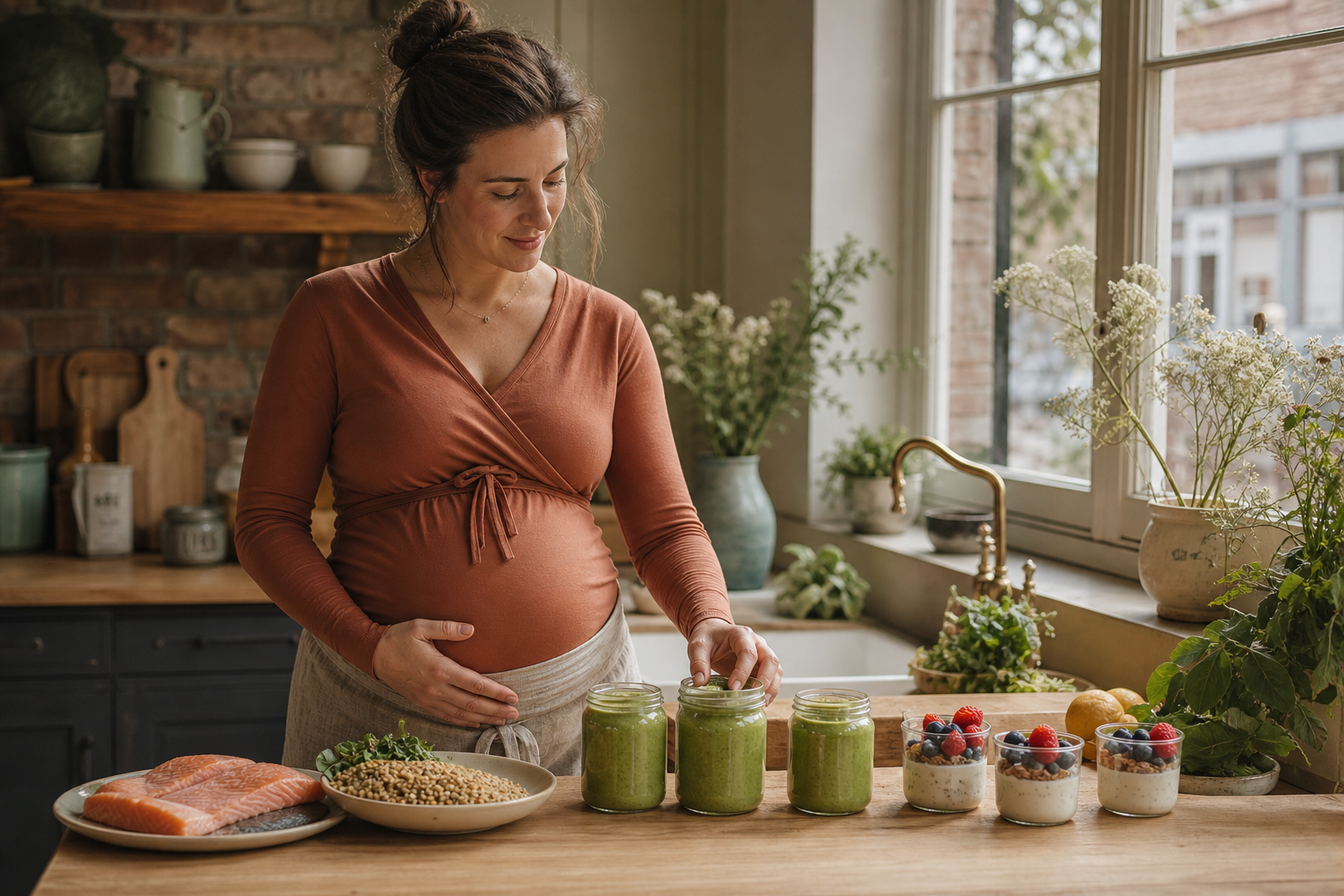
- Dinner: Baked salmon (or a lentil dish), roasted vegetables, and a portion of whole grains or potatoes.
- Evening: A small yoghurt or warm milk if you are hungry, which many people are in later pregnancy.
In the first trimester, the same day might shrink to gentler, blander versions — toast, crackers, fruit, a little yoghurt — and that is completely fine. In the third trimester, you might split these into more frequent, smaller portions to accommodate a fuller, more crowded stomach.
Hydration and Everyday Comfort
Hydration tends to get overlooked, yet it supports your expanded blood volume, helps with the constipation that pregnancy hormones can cause, and can ease fatigue. Water is the mainstay; herbal options vary in their suitability, so check any teas with your provider. If plain water is hard during nausea, try it cold, with a slice of lemon, or as ice. Fibre-rich foods plus adequate fluids are also your best everyday allies against constipation — a small, practical detail that makes a real difference to comfort.
When to See a Dietitian During Pregnancy
A pregnancy nutrition plan is something most people can build with general guidance, their provider, and a little support. But there are moments when one-to-one dietitian input genuinely helps:
- You have a condition such as gestational diabetes, anaemia, or a thyroid issue, and want food guidance that works alongside your medical care.
- You follow a vegetarian, vegan, or allergen-restricted diet and want reassurance you are covering key nutrients.
- Nausea, aversions, or appetite changes are making balanced eating feel impossible.
- You are expecting twins or more and want to understand your changing needs.
- You simply want a clear, personalised plan rather than piecing together conflicting advice online.
A dietitian works with your midwife and OB, never instead of them. My role is to translate the medical picture into food that fits your life, your culture, and your week.
Working With Hanzi Nutrition
I support clients through pregnancy with calm, evidence-informed nutrition guidance designed to complement their medical care. Sessions are online (or hybrid), in English or Turkish, and built around your real life — your symptoms, your kitchen, your routines, and your goals. We map out a flexible plan trimester by trimester, troubleshoot nausea and appetite changes, and make sure the nutrients that matter are covered in a way that feels doable rather than daunting.
Whether you are newly pregnant and overwhelmed by conflicting advice, or further along and wanting to fine-tune, I can help you feel confident about what is on your plate.
Planning your pregnancy nutrition? Contact Hanzi Nutrition to build a trimester-by-trimester plan that fits your life and works alongside your midwife or OB.
Hanzi Nutrition offers online nutrition counselling across the Netherlands, Belgium, Germany, and Turkey, in English and Turkish. This article is general education and not a substitute for personalised medical or prenatal care. Always coordinate nutrition decisions during pregnancy with your midwife, doctor, or healthcare provider.
Continue reading
- How Much Weight to Gain in Pregnancy: A Calm, Non-Judgmental Guide
- What to Eat with PCOS: A Dietitian's Practical Food Guide
Ready for personalised nutrition guidance? Book a consultation with Hanzi Nutrition, or explore all our services.