A dietitian's baby first foods schedule — readiness signs at 6 months, a stage-by-stage plan, iron-rich foods, allergens, textures, and foods to avoid.
Few milestones feel as exciting — or as nerve-wracking — as the first spoonful. Parents often arrive in my practice with a phone full of conflicting advice and one simple question: where do I actually begin? A clear, realistic baby first foods schedule takes the guesswork out of those early weeks, so you can focus on the part that matters: helping your baby learn to eat with confidence, at their own pace.
In this guide I'll walk through how to know your baby is ready, what to offer in the first weeks and months, how to introduce iron-rich foods and common allergens, how textures progress, and which foods to avoid entirely. As always, this is general education — every baby develops differently, so coordinate with your pediatrician or consultatiebureau, especially if your baby was born early or has any medical needs.
Signs Your Baby Is Ready for Solids (Around 6 Months)
Most babies are ready to start solids at around six months of age. Age is a useful guide, but the more reliable signal is developmental readiness. I look for three signs together, not just one:
- Steady head and trunk control. Your baby can sit upright with little or no support and hold their head steady. This is the foundation for safe swallowing.
- Loss of the tongue-thrust reflex. Younger babies automatically push food out with their tongue. When that reflex fades, food can move to the back of the mouth instead of straight back out.
- Genuine interest in food. Reaching for your plate, opening the mouth when a spoon approaches, and watching you eat with intent are all good cues.
A few things that are not reliable signs on their own: waking more at night, chewing fists, or simply hitting a certain weight. These are normal at many ages and don't mean your baby needs solids yet. Starting much before 17 weeks (about four months) is not recommended, and breast milk or formula remains your baby's main source of nutrition throughout the first year. Solids in the beginning are about practice and exposure, not replacing milk.
A Stage-by-Stage Starting Solids Schedule
Rather than a rigid calendar, think in stages. Babies move through these at different speeds, and that is completely normal.
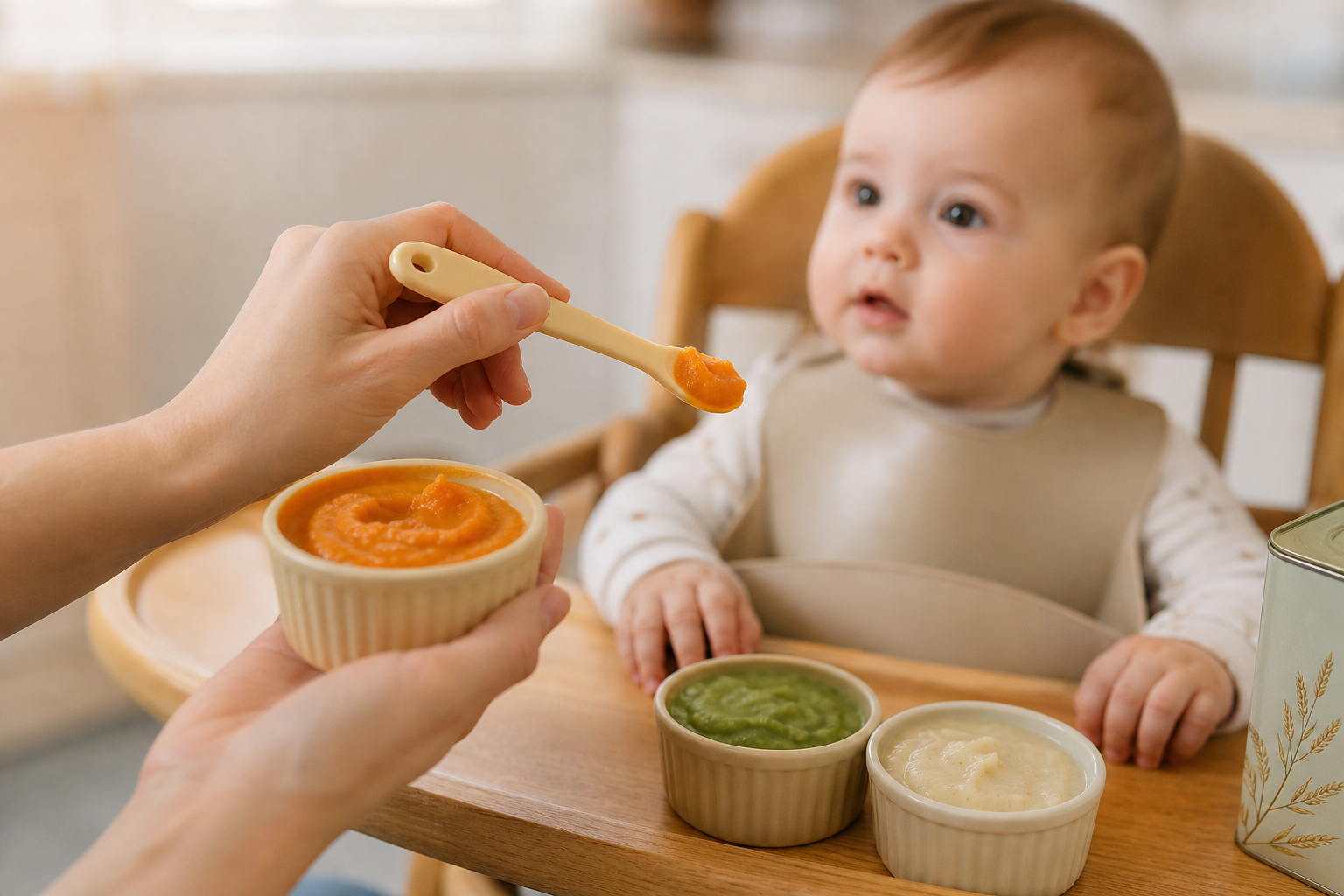
Stage 1 — First foods (around 6 months). Begin with one small "meal" a day, offered when your baby is content and not overtired or ravenous (a useful trick: offer a little milk first, then food). Single-ingredient purées or soft, mashed foods work well: well-cooked vegetables, soft fruit, iron-fortified infant cereal, or smooth meat and lentil purées. Start with a teaspoon or two and let your baby set the pace. Expect mess, face-pulling, and food that ends up everywhere but the stomach — this is learning, not rejection.
Stage 2 — Building variety (around 7–8 months). Move toward two, then three small meals a day. Widen the range of flavours and start thicker, lumpier textures and soft finger foods. This is the window where babies are typically most open to new tastes, so offer plenty of vegetables, including the bitter ones (broccoli, spinach, courgette) alongside sweeter fruit.
Stage 3 — Toward family meals (around 9–12 months). Most babies are now eating three meals a day plus milk, managing more texture, and feeding themselves with hands and a loaded spoon. Aim to offer modified versions of what the family eats, minus added salt and sugar and minus choking hazards. By their first birthday, many babies are eating a varied diet of soft family foods.
Iron-Rich First Foods Deserve Special Attention
Around six months, a baby's iron stores from birth begin to run low, and breast milk is low in iron. This makes iron one of the most important nutrients to build into your baby first foods schedule early and consistently — not something to add later.
Good iron-rich first foods include:
- Iron-fortified infant cereals — an easy, reliable everyday source you can mix to any texture.
- Well-cooked, finely minced or puréed meat and poultry — beef, lamb, and chicken provide easily absorbed iron.
- Lentils, beans, and chickpeas — cooked very soft and mashed; excellent plant sources.
- Egg (well cooked) and smooth tofu — versatile and gentle on new palates.
- Dark leafy greens like spinach, cooked and finely chopped or puréed.
A practical tip I share often: pairing plant iron sources with a little vitamin C — a few pieces of soft fruit, some cooked tomato or pepper — helps the body absorb the iron. If your baby is mostly vegetarian or vegan, mention this to your pediatrician or dietitian so iron and vitamin B12 can be planned deliberately.
Introducing Allergens: Early and Often
Guidance has shifted significantly in recent years. Current advice is to introduce common allergenic foods early — from around six months, alongside other first foods — rather than delaying them. Delaying introduction does not prevent allergy and may even increase risk. The common allergens to work in include:
- Egg (well cooked)
- Peanut (as smooth peanut butter thinned with water or mixed into purée — never whole nuts or thick spoonfuls)
- Dairy (such as full-fat yoghurt; cow's milk as a main drink waits until 12 months)
- Wheat and other gluten-containing grains
- Fish and shellfish (well cooked)
- Soy, sesame (as thinned tahini), and tree nuts (as smooth butters or ground)
Introduce one new allergen at a time, in a small amount, ideally earlier in the day so you can watch for a reaction. Once a food is tolerated, keep offering it regularly — "often" matters as much as "early." Most reactions are mild (a rash around the mouth, for example), but if you see swelling of the lips or face, widespread hives, vomiting, or any difficulty breathing, stop and seek medical help immediately. If your baby has severe eczema, an existing food allergy, or a strong family history of allergy, talk to your pediatrician before introducing allergens — they may recommend a tailored plan.
How Textures Should Progress
Texture progression is one of the most overlooked parts of starting solids, yet it matters enormously for chewing skills and for accepting a varied diet later. The general arc looks like this:
- 6 months: smooth purées and soft mashes, plus very soft finger foods (a steamed broccoli floret, a soft strip of well-cooked sweet potato) for babies who want to self-feed.
- 7–8 months: thicker, lumpier textures, minced and mashed foods, and more finger foods.
- 9–12 months: soft chopped foods, more complex combinations, and pieces your baby can pick up and chew.
Don't stay on smooth purées too long. Babies who aren't offered lumps and texture by around nine months can become more resistant to them, which can make mealtimes harder down the line. Gagging is common and normal as babies learn — it's a protective reflex, not the same as choking. I cover this in detail in my baby-led weaning guide.
Foods to Avoid in the First Year
A short list of foods are best kept off the menu entirely while your baby is small:
- Honey — even a taste — until 12 months, because of the risk of infant botulism.
- Whole nuts, popcorn, hard raw vegetables and fruit, whole grapes and cherry tomatoes, and large chunks — all choking hazards. Always grate or cook hard foods soft, and quarter small round foods lengthways.
- Added salt and sugar. A baby's kidneys can't handle much salt; avoid stock cubes, processed meats, and salty snacks, and skip added sugar and sugary drinks.
- Whole cow's milk as a main drink before 12 months (small amounts in cooking or with cereal are fine from six months).
- Rice drinks as a main milk substitute for under-fives, and very low-fat foods — babies need the energy density of full-fat options.
Above all, never leave your baby alone while eating, and always have them seated upright rather than reclined or moving around.
A Sample First-Week and Daily Schedule
Here's a gentle starting point for the first week (one meal a day, after a milk feed), then a sample day once your baby is established on three meals. Adjust freely — milk feeds continue around these.
- Days 1–2: a few teaspoons of smooth vegetable purée (e.g. carrot or sweet potato).
- Days 3–4: soft fruit purée (e.g. pear or banana), or iron-fortified cereal.
- Days 5–7: introduce a smooth meat or lentil purée for iron; begin offering one allergen (e.g. a little well-cooked egg).
A sample day at around 9–10 months:
- Breakfast: porridge made with full-fat milk, plus a few soft fruit pieces and a scrape of smooth peanut butter mixed in.
- Lunch: soft-cooked lentils with vegetables, a strip of toast fingers, and slices of soft avocado.
- Dinner: flaked well-cooked fish or minced meat, mashed potato, and steamed soft vegetable florets, with full-fat yoghurt and fruit after.
Milk (breast or formula) continues across the day. The goal by 12 months is a varied, iron-rich diet of soft family foods your baby helps feed themselves.
Working With Hanzi Nutrition
Starting solids can feel like a lot, especially when your baby seems uninterested, gags often, or you're managing allergens with a family history to consider. As a dietitian, I help parents build a calm, practical plan around their own baby — covering iron, texture progression, allergen introduction, and fussy-eating worries — that works alongside your pediatrician or consultatiebureau, never in place of them.
I work with families across the Netherlands, Belgium, Germany, and Turkey, fully online and in English or Turkish, so support is available wherever you are and in the language you're most comfortable in.
Starting your baby on solids? Contact Hanzi Nutrition to build a first-foods plan tailored to your baby and your family.
Hanzi Nutrition offers online nutrition counselling across the Netherlands, Belgium, Germany, and Turkey, in English and Turkish. This article is general education and not a substitute for individual medical advice; please coordinate your baby's feeding with your pediatrician, consultatiebureau, or midwife, as every baby develops differently.
Continue reading
- Baby-Led Weaning: A Complete Guide for Confident, Safe Starts
- What to Eat with PCOS: A Dietitian's Practical Food Guide
Ready for personalised nutrition guidance? Book a consultation with Hanzi Nutrition, or explore all our services.