
FeaturedDigital Download
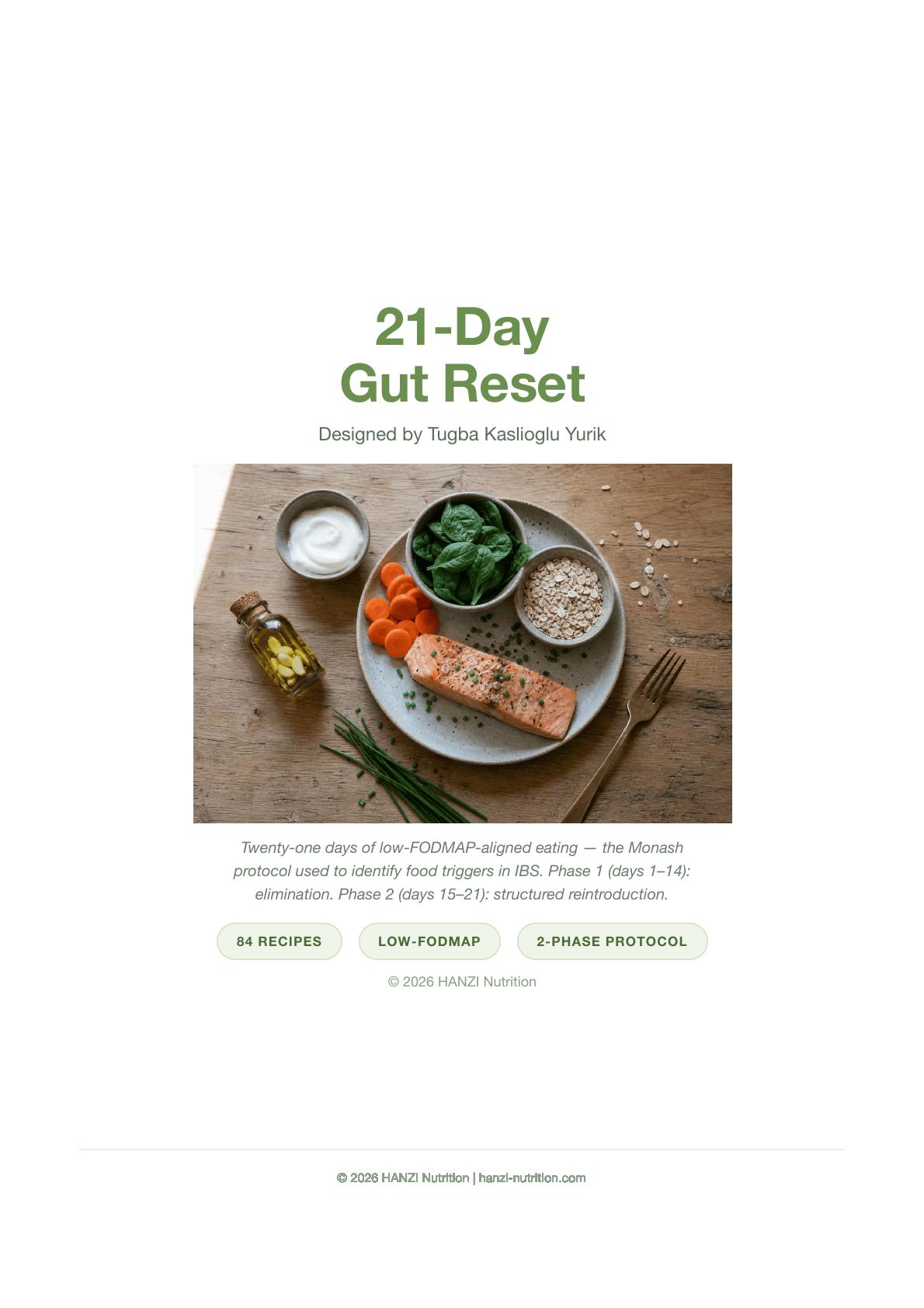
21-Day Gut Reset Challenge
€3.99
Twenty-one days of low-FODMAP-aligned eating — Monash protocol elimination phase 1 (days 1–14) plus structured reintroduction (days 15–21). A unique meal plan for every day. Diagnostic, not permanent.
1
Secure Payment
Instant Download
Satisfaction Guaranteed
What You'll Get
- Downloadable PDF (77 pages)
- 84 unique recipes (63 mains + 21 snacks)
- 21-day sample rotation
- Weekly shopping list
- Activity-Level Addendum (BMR + portion scaling)
- Daily tracker (checklist + notes)
- 4 cited references
From Tugba
Twenty-one days is enough for elimination (14 days) plus a structured reintroduction window (7 days). These 7 sample days don’t overlap with any other plan. Rotate them through phase 1, then start the reintroductions during phase 2. The endpoint is a personalised diet that includes everything you tolerate — not perpetual restriction.
— Tugba
Plan at a Glance
Daily macronutrient split
Fat — 30%
Protein — 22%
Carbs — 48%
Target: ~1,700 kcal/day — scaleable via the included Activity-Level Addendum.
84 RecipesLow-FODMAP2-Phase Protocol
Clinical Foundations
The evidence behind this plan, and what the data does and doesn't show
FODMAPs are fermentable short-chain carbohydrates that poorly absorb in the small intestine and ferment in the colon. The Monash low-FODMAP protocol is the most evidence-based dietary intervention for IBS-type symptoms. The full programme runs 2–6 weeks of strict elimination, then 6–8 weeks of structured reintroduction.
What the evidence supports
Low-FODMAP improves symptoms in 50–75% of IBS patients (Halmos et al., 2014; Böhn et al., 2015). Effects on bloating, pain, and stool consistency are well-documented. The reintroduction phase is the most clinically valuable feature.
What the evidence does not robustly support
Not a long-term diet; sustained strict elimination reduces microbial diversity. Not for non-IBS gut symptoms (no evidence in IBD, coeliac). “Leaky gut reset” claims aren’t supported by research — what it does is symptom management while you identify triggers.
This plan
Targets ~1,700 kcal/day with macros around 30%F / 22%P / 48%C. Days 1–14: strict low-FODMAP elimination. Days 15–21: structured reintroduction (lactose day 15–16, fructans day 17–18, polyols/excess fructose day 19–20, review day 21).
Protocol Rules
- Days 1–14 strict elimination. Only low-FODMAP foods. Use the Monash app for portions.
- Days 15–21 reintroduction. Day 15–16 lactose; 17–18 fructans; 19–20 excess fructose/polyols; 21 review.
- Keep a symptom log. Bloating, pain, gas, stool, energy, mood. Reintroduction is useless without it.
- Garlic-infused oil = compliant. FODMAPs are water-soluble. Garlic flavour in oil is fine.
- Lactose-free dairy in phase 1. Lactose-free milk, hard cheeses (cheddar, parmesan moderate) are low-FODMAP.
- Portion matters. Many vegetables are low-FODMAP at 75g but high at 150g.
- This is diagnostic, not permanent. The endpoint is personalised eating with everything you tolerate.
⚠ Who this plan isn’t designed for
Pregnancy or breastfeeding; active eating-disorder history; children; IBD in active flare (consult gastroenterologist first); undiagnosed weight loss or anaemia (rule out red flags first).
If any of the above applies, please talk with your physician before starting this plan.
Medication note. If you take prescription medication, please talk with your prescriber before starting. Diet changes can affect how some medications work.
If any of the above applies, please talk with your physician before starting this plan.
Medication note. If you take prescription medication, please talk with your prescriber before starting. Diet changes can affect how some medications work.
Tips for Success
- Download the Monash FODMAP app. Most authoritative portion source.
- Stock garlic-infused oil and spring onion tops. Replicate most allium flavour.
- Plan around protein. Meat, fish, eggs, firm tofu — all low-FODMAP.
- Re-baseline after each reintroduction. Wait for symptoms to settle before reintroducing the next group.
- Most people tolerate something. Aim to find at least 3 foods you can permanently reintroduce.
- Consider a dietitian. Especially for clinically diagnosed IBS.
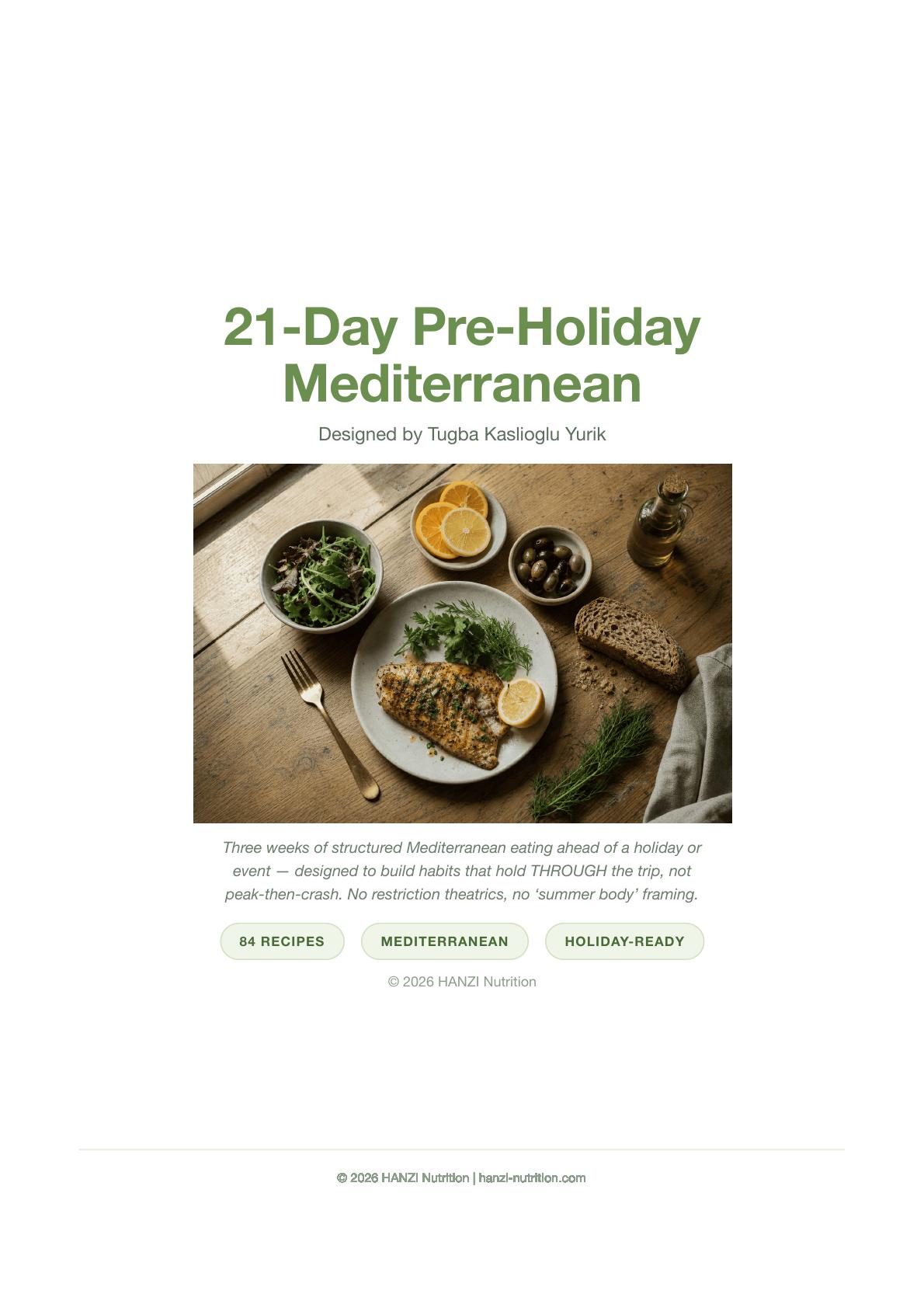
21-Day Pre-Holiday Mediterranean
Three weeks of structured Mediterranean eating ahead of a holiday or event — des...
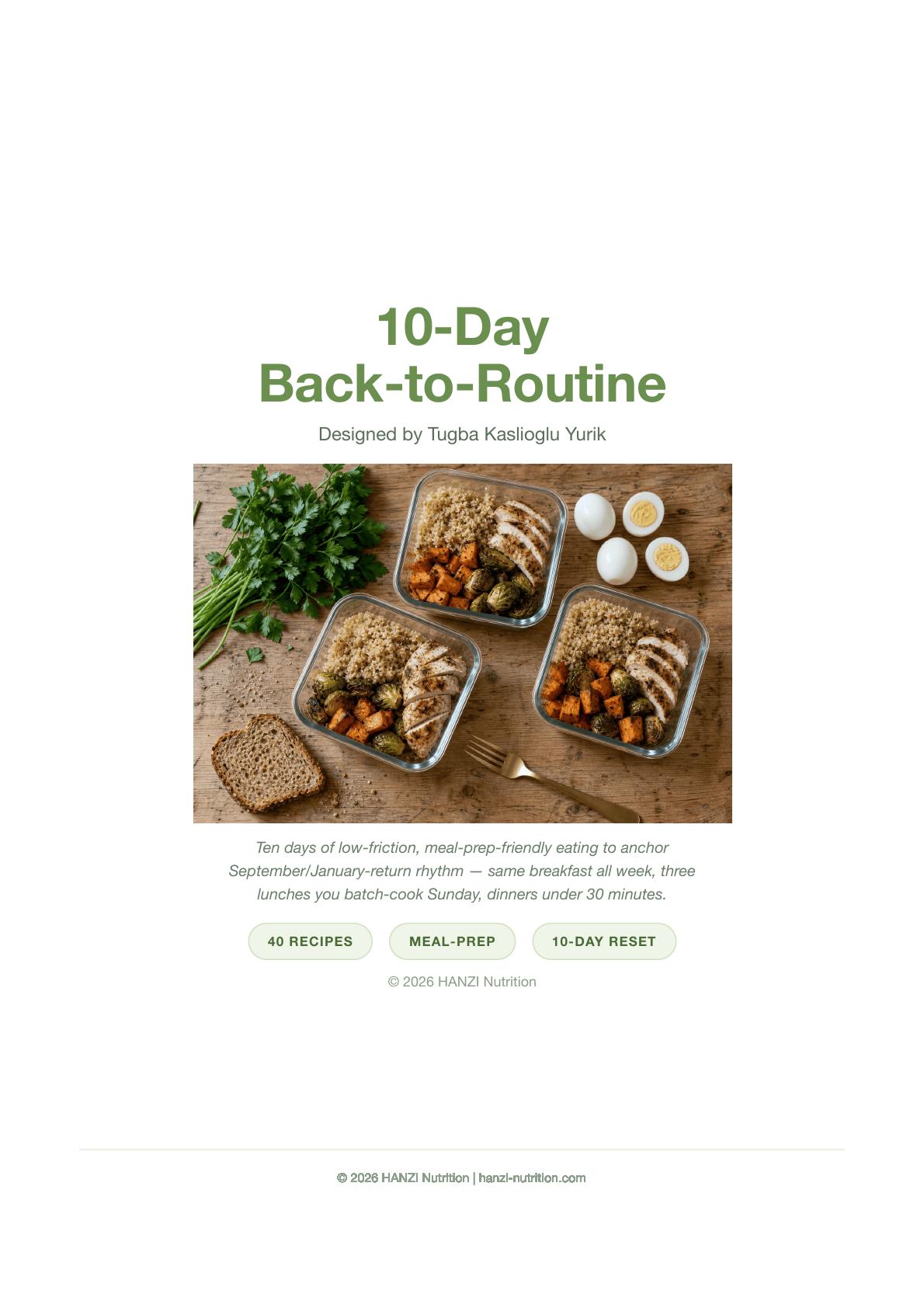 Featured
10-Day Back-to-Routine
Ten days of low-friction, meal-prep-friendly eating to anchor September/January-...
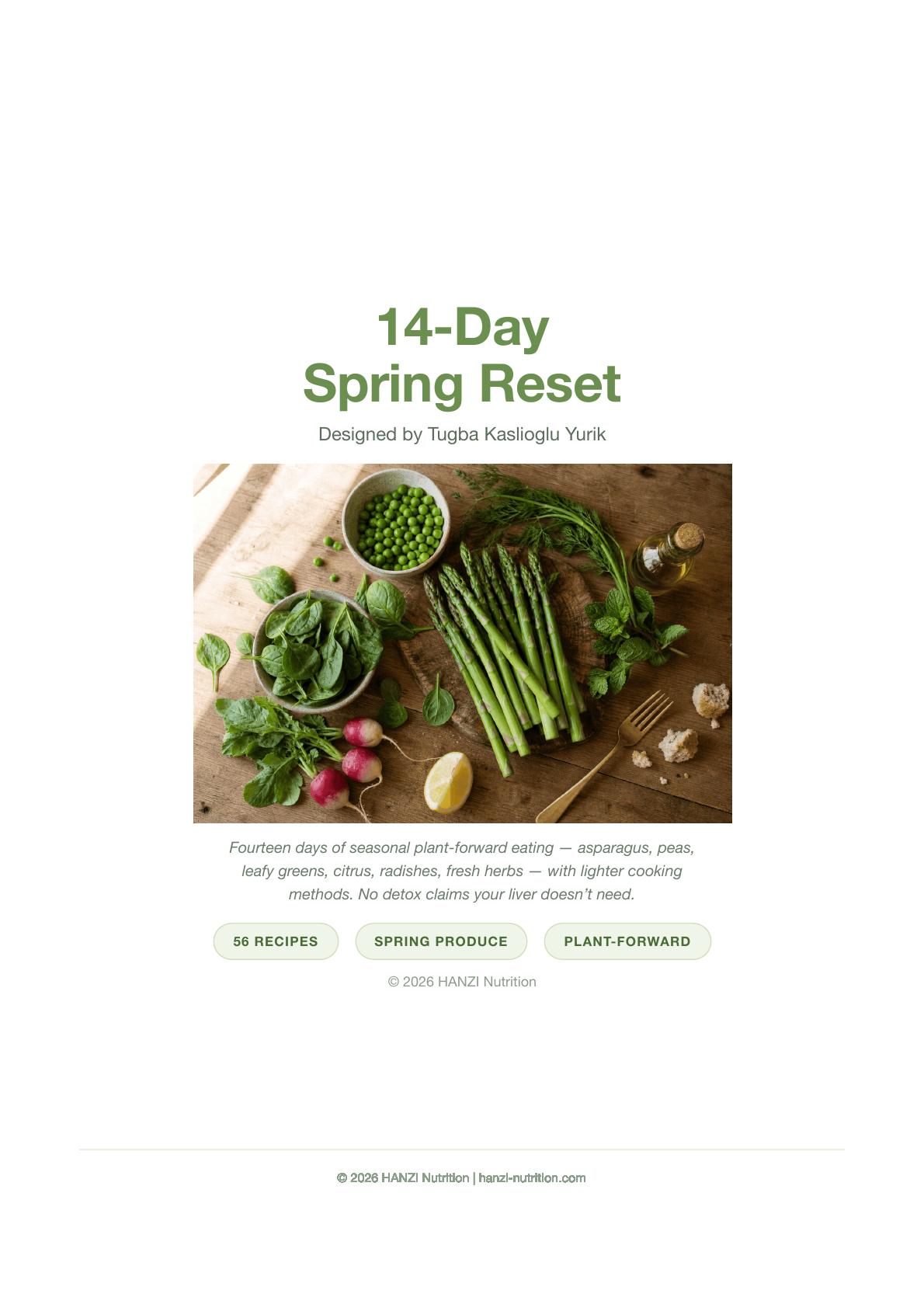
14-Day Spring Reset
Fourteen days of seasonal plant-forward eating — asparagus, peas, leafy greens, ...
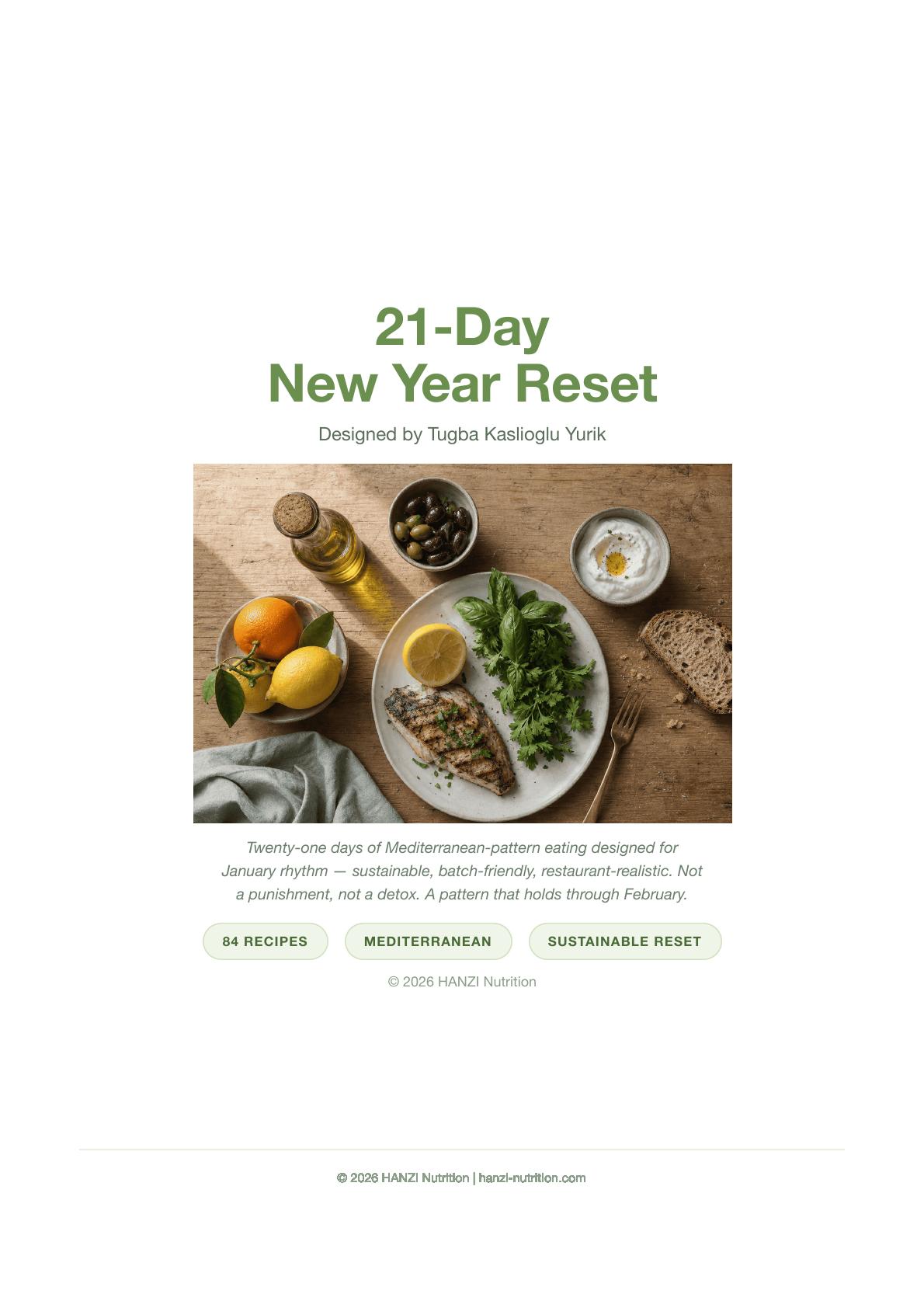
21-Day New Year Reset
Twenty-one days of Mediterranean-pattern eating designed for January rhythm — su...