Plant-based eating has never been more mainstream — and it has also never been more confused. In 2026, the market is flooded with ultra-processed vegan alternatives that carry a "plant-based" label but deliver little nutritional value. At the same time, genuinely transformative research continues to emerge on the health benefits of whole-food plant-based (WFPB) eating: improved gut health, reduced inflammation, better metabolic function, and lower risk of chronic disease.
The key distinction? Ultra-processed oat-protein nuggets and pea-protein sausages are not the same as a bowl of lentil soup, roasted vegetables, and whole grains. The plant-based diet that changes your health is built on real, whole foods — not on swapping animal products for their industrial plant-based equivalents.
Here is what a whole-food plant-based diet actually looks like in 2026, what the evidence says, and how to do it well.
What Is a Whole-Food Plant-Based Diet?
A whole-food plant-based (WFPB) diet centers on:
- Vegetables — all colors, all forms, in abundance
- Fruits — fresh, frozen, or dried without added sugar
- Legumes — lentils, chickpeas, black beans, edamame, tofu, tempeh
- Whole grains — oats, brown rice, quinoa, bulgur, whole wheat
- Nuts and seeds — walnuts, almonds, flaxseed, hemp seeds, tahini
- Healthy fats — avocado, extra virgin olive oil, nuts
It minimizes or eliminates:
- Animal products (meat, fish, dairy, eggs)
- Refined grains and added sugars
- Ultra-processed foods, even "plant-based" ones
This is different from simply being vegan. A vegan diet can be highly processed and nutritionally poor. A WFPB diet is defined not just by what it excludes, but by the quality and diversity of what it includes.
Why 2026 Is the Year of the WFPB Diet
Two trends define nutrition in 2026, and the WFPB diet sits at the intersection of both:
1. The fiber revolution ("fibermaxxing") Dietitians and researchers are increasingly convinced that fiber — not just protein, not just fat — is the most underestimated nutrient in modern diets. Most adults in Western countries get less than half the recommended daily fiber intake (25–38g). A WFPB diet, centered on legumes, vegetables, whole grains, and seeds, easily delivers 40–60 grams of fiber per day. This is gut-transforming.
2. The shift from processed "plant-based" to real plant foods Consumer fatigue with expensive, over-engineered plant-based meat alternatives is driving a return to simple, whole ingredients. Lentils, chickpeas, beans, and whole grains are having a cultural moment — and for good nutritional reason.
The Health Benefits: What the Evidence Shows
Gut microbiome diversity. A WFPB diet is the single most powerful dietary strategy for improving microbiome health. The diversity of plant foods you eat directly predicts the diversity of your gut bacteria — and higher gut diversity is associated with reduced inflammation, better immune function, and improved mental health.
Cardiovascular protection. Decades of research link plant-based diets to lower LDL cholesterol, reduced blood pressure, and lower rates of heart disease. The fiber, potassium, antioxidants, and anti-inflammatory compounds in whole plant foods all contribute.
Weight management. WFPB diets tend to be naturally lower in calorie density, meaning you can eat satisfying volumes of food while maintaining a healthy energy balance. This is not about restriction — it is about the composition of your plate.
Blood sugar regulation. Legumes, whole grains, and vegetables all have a lower glycemic impact than refined carbohydrates or processed foods, supporting more stable blood glucose and reduced risk of type 2 diabetes.
Inflammation reduction. Chronic low-grade inflammation underlies most modern chronic disease. Plant foods are among the richest sources of anti-inflammatory compounds: polyphenols, flavonoids, carotenoids, and fiber fermentation products.
The Nutritional Considerations You Cannot Ignore
A WFPB diet, done well, is nutritionally powerful. Done carelessly, it can create deficiencies that undermine your health. Here are the nutrients that require intentional attention:
Vitamin B12. This is the most critical: B12 is found almost exclusively in animal products and must be supplemented on a plant-based diet. Without it, the consequences — neurological damage, anemia — are serious and can be irreversible.
Vitamin D. Most people in Northern Europe are already deficient regardless of diet. A daily supplement (1000–2000 IU, or more if deficient) is warranted for most of my clients.
Omega-3 fatty acids (DHA/EPA). These are well-supplied by oily fish, but plant sources only provide ALA (found in flaxseed, walnuts, hemp), which converts to EPA/DHA inefficiently. An algae-based omega-3 supplement is the most direct solution for plant-based eaters.
Iron. Plant-based iron (non-heme) is less bioavailable than meat iron. Combine iron-rich foods (lentils, spinach, pumpkin seeds) with vitamin C (lemon juice, bell pepper) to maximize absorption.
Calcium. Without dairy, getting enough calcium requires intention: fortified plant milks, tofu made with calcium sulfate, tahini, white beans, bok choy, and fortified foods.
Iodine. Often overlooked on plant-based diets. Use iodized salt, or consider a supplement — seaweed can be used but provides inconsistent amounts.
Zinc. Found in legumes, nuts, seeds, and whole grains, but absorption is lower from plant sources. Variety and adequate intake are key.
This is exactly why dietitian guidance matters for plant-based eating: not to make it more complicated, but to make sure it is nutritionally complete.
Building a WFPB Day: What It Looks Like
Breakfast: Oat porridge with ground flaxseed, walnuts, blueberries, and fortified oat milk. A kiwi on the side.
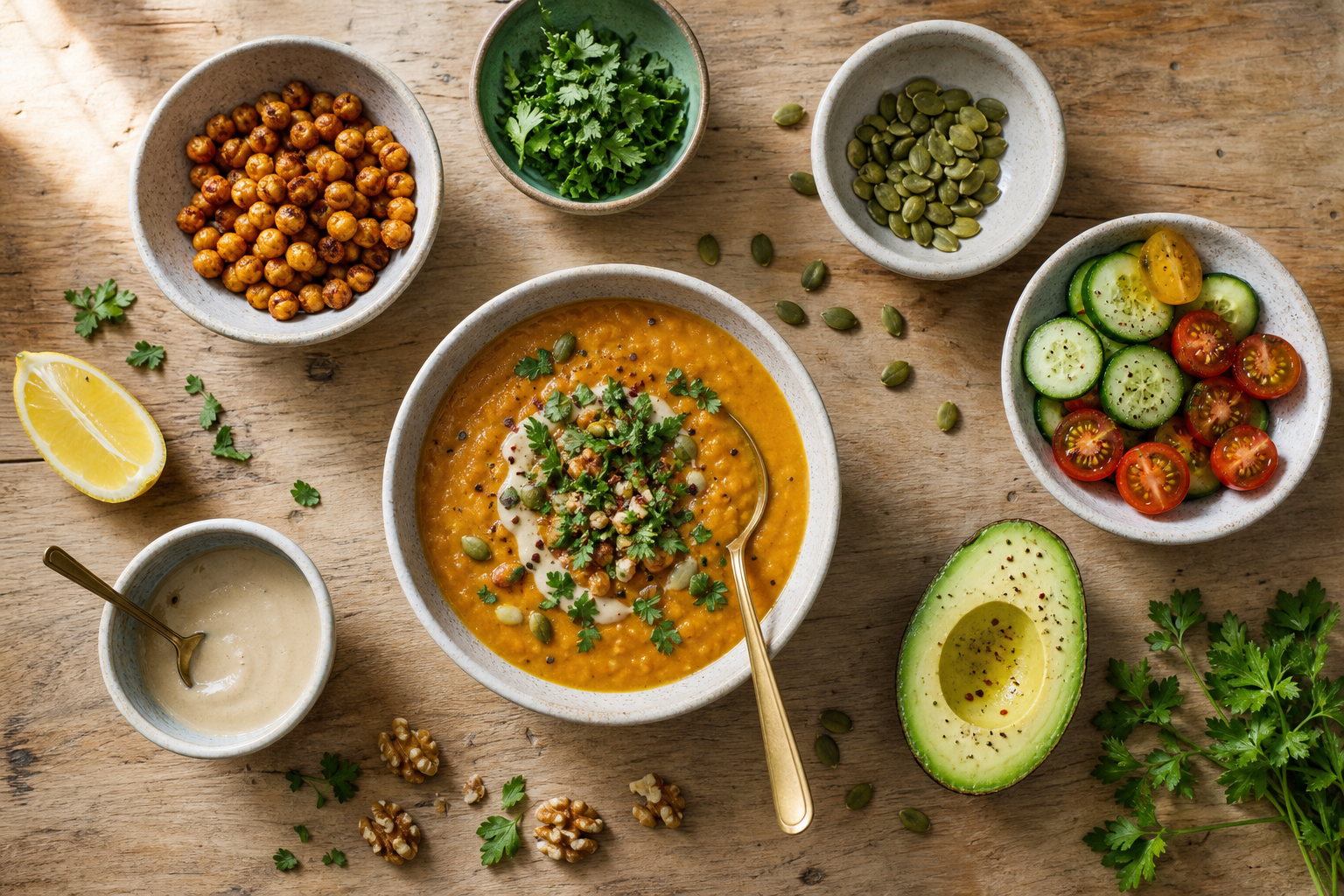
Lunch: Spiced red lentil soup with whole grain sourdough and a large mixed green salad with tahini-lemon dressing and pumpkin seeds.
Dinner: Chickpea and sweet potato curry with brown rice and wilted spinach, finished with a squeeze of lemon.
Snack: A small handful of mixed nuts and an apple, or hummus with raw vegetable sticks.
Supplements: B12 (daily), vitamin D (daily), algae-based omega-3 (daily).
This day delivers approximately 45–55g of fiber, complete protein across meals, and a wide spectrum of micronutrients — with no animal products required.
Is a Plant-Based Diet Right for You?
A WFPB diet can be appropriate for most healthy adults, including during pregnancy (with careful planning and supplementation), for athletes, and across all life stages. It requires more nutritional knowledge and attention than omnivorous eating — which is why professional guidance makes such a significant difference.
It may not be the right choice if you have certain medical conditions, if you strongly dislike the foods involved, or if the planning demands do not fit your current life. A dietitian can help you evaluate whether it is a good fit and build a plan that is realistic and nutritionally sound.
Get a WFPB Plan Built Around You
Whether you are just starting to explore plant-based eating or ready to commit fully, personalized dietitian support makes the transition healthier, safer, and more sustainable. At Hanzi Nutrition, I help clients across the Netherlands, Germany, Belgium, and Europe build WFPB plans that meet all their nutritional needs — without gaps, without restriction, and with real enjoyment of food.
Book your online consultation at hanzi-nutrition.com.
Explore more evidence-based nutrition advice on our nutrition blog, or browse our diet plans.
Written by Tugba Kaslioglu Yurik, Expert Dietitian | Hanzi Nutrition
Published: May 2026