Every year, new diets compete for the spotlight. In 2026, the trends are fibermaxxing, GLP-1 nutrition support, and gut-health optimization. But beneath all the noise, one dietary pattern has remained at the top of clinical rankings for more than a decade: the Mediterranean diet.
This is not nostalgia or marketing. A landmark European study published in 2026 found that a calorie-adjusted Mediterranean diet — combined with exercise and coaching — dramatically reduced the risk of developing type 2 diabetes in high-risk adults. The evidence base for this eating pattern spans cardiovascular disease, cognitive function, metabolic health, and mental wellbeing. No single supplement, superfood, or biohack comes close.
So what does a Mediterranean diet actually look like in practice? And how do you adapt it to a busy, modern life in Northern Europe?
What the Mediterranean Diet Actually Is
The Mediterranean diet is not a rigid meal plan with strict rules. It is an eating pattern — a philosophy of food — rooted in the traditional cuisines of countries bordering the Mediterranean Sea: Greece, Italy, Spain, Turkey, and Morocco, among others.
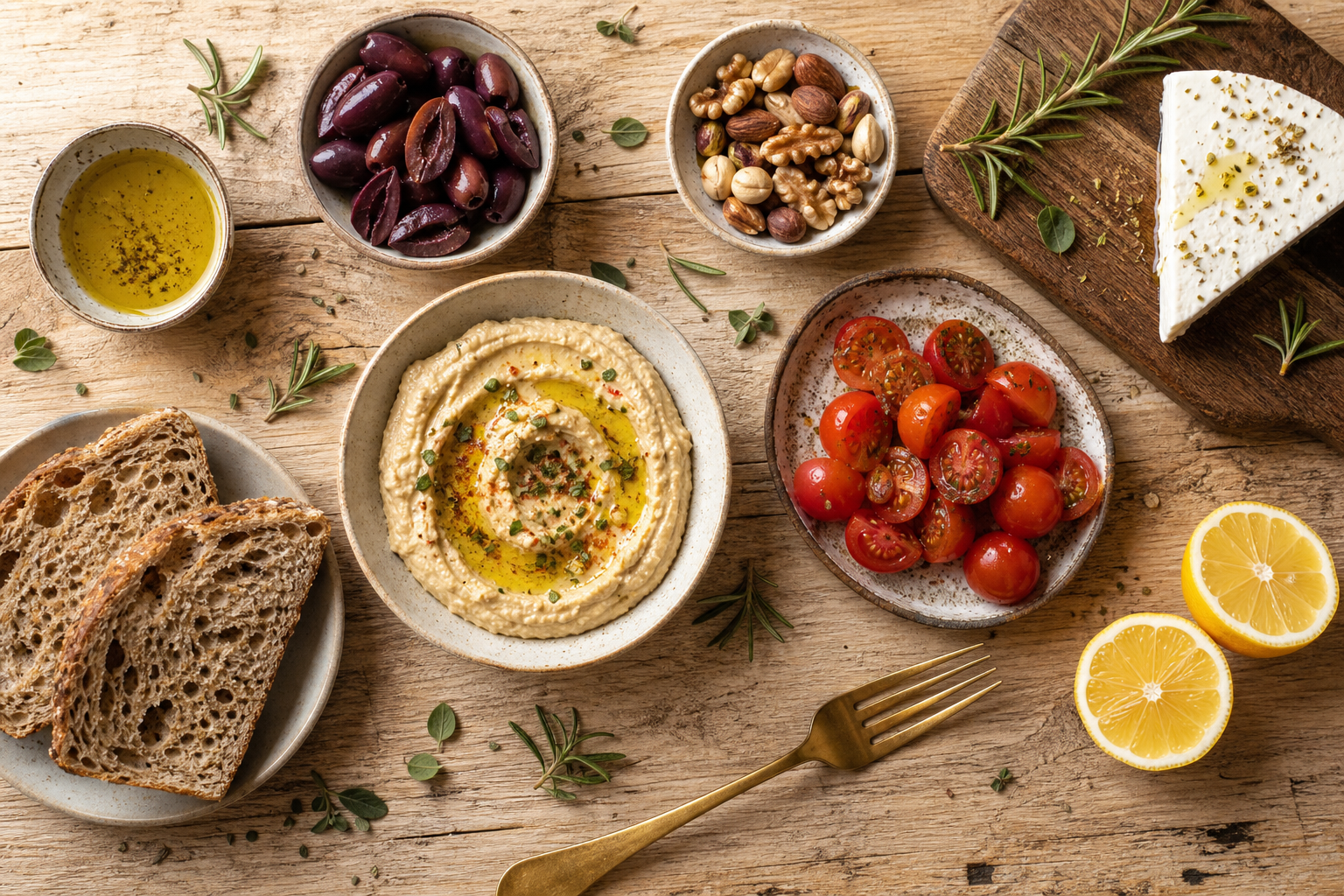
At its core, it is built on:
- Vegetables and legumes — generously and daily
- Whole grains — bulgur, farro, brown rice, whole wheat bread
- Healthy fats — primarily extra virgin olive oil; nuts and seeds as daily additions
- Fish and seafood — at least twice a week, ideally oily fish like salmon, sardines, or mackerel
- Dairy in moderation — mainly yogurt and cheese, especially fermented varieties
- Poultry occasionally — eggs and chicken a few times per week
- Red meat rarely — a few times per month at most
- Fresh fruit as dessert — rather than processed sweets
- Red wine optionally — in moderation, typically with meals
What makes this pattern powerful is not any single food but the cumulative effect of dozens of anti-inflammatory, fiber-rich, antioxidant-dense components working together.
The Science: What the Mediterranean Diet Can Actually Do
The research on the Mediterranean diet is unusually robust. Here is what the evidence shows:
Cardiovascular health: The PREDIMED trial — one of the largest nutrition studies ever conducted — found a 30% reduction in major cardiovascular events in high-risk adults who followed a Mediterranean diet supplemented with olive oil or nuts. These findings have been replicated across dozens of subsequent studies.
Type 2 diabetes prevention: The 2026 European PREDIMED-Plus study confirmed that a Mediterranean diet with mild calorie restriction, physical activity, and behavioral support significantly reduced diabetes incidence in overweight adults with metabolic risk.
Cognitive function: Higher adherence to the Mediterranean diet is associated with reduced risk of cognitive decline and Alzheimer's disease, likely through anti-inflammatory and neuroprotective mechanisms.
Mental health: A growing body of research connects the Mediterranean diet to lower rates of depression and anxiety. The gut-brain axis plays a key role: a fiber-rich, diverse diet feeds a healthy microbiome, which produces neurotransmitter precursors and anti-inflammatory compounds.
Longevity: Blue Zones research consistently finds Mediterranean-adjacent eating patterns in populations with the highest rates of healthy aging and longest lifespans.
Adapting the Mediterranean Diet to Life in Northern Europe
One question I hear often from clients in the Netherlands, Germany, and Belgium: "Can I really follow a Mediterranean diet here?"
Absolutely — with some thoughtful adaptation. The Mediterranean diet is a pattern, not a geography. You do not need to source ingredients from a Greek village to benefit. Here is how I help clients make it work:
Swap in local equivalents. Dutch rye bread instead of sourdough. Herring and mackerel (abundant in the North Sea) instead of Mediterranean fish. Locally grown vegetables. The specific ingredients matter less than the overall pattern.
Embrace extra virgin olive oil. This is the one ingredient I recommend importing. Good quality EVOO — used for cooking, dressing, and finishing dishes — is central to the diet's benefits and simply has no perfect local substitute.
Build around weekly fish meals. The Netherlands has excellent access to fresh and smoked fish. Aim for oily fish at least twice a week: smoked mackerel, fresh salmon, tinned sardines, or North Sea herring are all wonderful options.
Lean on legumes. Lentil soup, chickpea stew, white bean salads — these are economical, fiber-rich, and deeply satisfying. They are also among the most powerful gut health foods in the Mediterranean diet.
Simplify dessert. Swap pastries and biscuits for fresh or dried fruit and a small piece of dark chocolate. This single change has a measurable impact on sugar intake and diet quality.
A Sample Mediterranean Day
Breakfast: Whole grain rye bread with avocado, a soft-boiled egg, and a drizzle of olive oil. A handful of walnuts. Coffee or herbal tea.
Lunch: Lentil and roasted vegetable soup with whole grain bread and olive oil. Greek yogurt with honey and a kiwi.
Dinner: Baked salmon fillet with lemon-herb quinoa and a large tomato, cucumber, and feta salad with olive oil and oregano dressing.
Snack: A small bowl of mixed olives and cherry tomatoes, or a piece of fruit with a few almonds.
This day delivers high fiber, abundant antioxidants, omega-3 fatty acids, quality protein, and a wide variety of plant foods — all without calorie counting or complicated rules.
Is the Mediterranean Diet Right for You?
The Mediterranean diet is one of the most adaptable, sustainable eating patterns available. It is not a temporary fix or a 30-day reset — it is a long-term relationship with food that most people find genuinely enjoyable.
It is appropriate for most healthy adults, and has evidence supporting its use in weight management, metabolic health, cardiovascular disease, and gut health. That said, everyone's situation is different, and a registered dietitian can help you adapt it to your specific health goals, food preferences, and lifestyle.
Start Your Mediterranean Plan with Personalized Support
Reading about the Mediterranean diet is the first step. Actually building a sustainable, enjoyable plan that accounts for your cooking habits, household, budget, and health goals is where dietitian support makes all the difference. At Hanzi Nutrition, I offer online consultations for clients throughout the Netherlands and Europe.
Book your consultation at hanzi-nutrition.com.
Explore more evidence-based nutrition advice on our nutrition blog, or browse our diet plans.
Written by Tugba Kaslioglu Yurik, Expert Dietitian | Hanzi Nutrition
Published: May 2026