PCOS and fertility nutrition explained by a dietitian — insulin sensitivity, a Mediterranean pattern, key nutrients, and realistic, supportive expectations.
If you have PCOS and you are trying to conceive, you have probably read a lot of bold promises about food. As a dietitian, I want to start somewhere more honest: PCOS and fertility nutrition is genuinely worth your attention, but it is one supportive piece of a bigger picture — not a guarantee, and never a replacement for the care of your doctor or fertility clinic. What you eat can support insulin sensitivity, hormonal balance, and overall reproductive health, and those are meaningful goals. It cannot promise a positive pregnancy test, and anyone who tells you otherwise is overselling.
With that framing in place, let me walk you through what the evidence actually supports, what to put on your plate, and how nutrition fits alongside the medical fertility care you may already be receiving. This is general education, written to help you ask better questions and feel less overwhelmed — not a personalised plan.
How Nutrition Supports Fertility Goals When You Have PCOS
PCOS often affects fertility through two connected routes: irregular or absent ovulation, and underlying insulin resistance that raises androgen levels and disrupts the hormonal signals involved in releasing an egg. Nutrition cannot override these mechanisms by force, but a supportive eating pattern can gently move the conditions in a more favourable direction.
The central idea is the same one that anchors all good PCOS nutrition: improving insulin sensitivity. When the body needs less insulin to manage blood sugar, the hormonal cascade that interferes with ovulation tends to ease for many people. This is why so much fertility-focused PCOS nutrition advice returns, again and again, to steady blood sugar and balanced meals rather than to any exotic ingredient.
It is worth saying plainly what this support looks like in real terms. A well-built eating pattern may help with more regular cycles for some people, steadier energy through a demanding treatment process, and a stronger nutritional foundation going into pregnancy. These are real, worthwhile outcomes. They are also individual — your body, your history, and your medical situation all shape what is realistic, which is exactly why this works best alongside your clinic rather than instead of it.
Why a Mediterranean Pattern Is a Strong Foundation
When clients ask me which "fertility diet" to follow, I point them toward a Mediterranean-style pattern rather than any branded plan. It has the best evidence base for both metabolic health and reproductive health, and it is flexible enough to adapt to almost any culture and kitchen.
A Mediterranean pattern for PCOS and fertility nutrition emphasises:
- Plenty of vegetables and fruit, across a range of colours, for fiber, antioxidants, and folate.
- Whole grains such as oats, bulgur, barley, and brown rice instead of refined white versions.
- Legumes — lentils, chickpeas, beans — as a regular source of plant protein and fiber.
- Oily fish two or so times a week for omega-3 fats, balanced with poultry, eggs, and dairy.
- Extra-virgin olive oil, nuts, and seeds as the main sources of fat.
- Limited ultra-processed food, sugary drinks, and refined carbohydrates.
This pattern naturally supports insulin sensitivity, delivers the nutrients important in the months before conception, and is calm and sustainable rather than restrictive. It is the foundation I build on with almost everyone in this stage.
Weight, Body, and Why I Frame This Carefully
This is the part of the conversation that deserves the most care, because it is so often handled badly. You may have been told, bluntly, that you simply need to lose weight to conceive. That message lands hard, and it usually leaves out the nuance.
Here is how I think about it. For some people with PCOS, changes in body weight can influence ovulation and treatment response — but this is highly individual, the relationship is not a simple dial, and it is far from the whole story. Many people with PCOS in smaller bodies also experience fertility challenges. So rather than fixing on a number on the scale, I focus with clients on behaviours that support health regardless of what the scale does: balanced meals, adequate protein and fiber, movement you enjoy, sleep, and a calmer relationship with food. These behaviours support insulin sensitivity and wellbeing whether or not body weight changes much.
If weight is part of your clinic's medical plan, we work with that respectfully and non-judgmentally, at a pace your body and mind can sustain. What I will not do is reduce your fertility to a willpower problem or hand you a punishing restriction. Crash diets and chronic under-eating are counterproductive for hormonal health and for fertility, and stress is not a side issue here — it is part of the picture. Sustainable, nourishing, and kind beats aggressive and short-lived every time.
Key Nutrients That Support Preconception Health
Certain nutrients matter especially in the months before and around conception. I will keep this general — your exact needs depend on your bloodwork, diet, and medical advice — but these are the ones worth understanding.
- Folate (and folic acid). Crucial for early fetal development, which is why preconception supplementation is standard medical advice. This is one nutrient where a supplement is routinely recommended before and in early pregnancy — follow your doctor's guidance on dose and timing. Food sources include leafy greens, legumes, and fortified grains.
- Omega-3 fats. Found in oily fish, walnuts, and flaxseed, these support an anti-inflammatory pattern and overall reproductive health. Two portions of oily fish a week is a sensible general target for many people.
- Vitamin D. Many people are low, particularly in northern Europe and during winter months, and adequacy supports general and reproductive health. Whether you need a supplement, and at what dose, should be guided by testing and your doctor.
- Iron, iodine, and B12. Relevant to preconception nutrition, particularly for those eating mostly or fully plant-based. A dietitian can help you check these are covered.
Two honest caveats. First, more is not better — high-dose supplements can cause harm and some interact with medications, so this is a conversation to have with your doctor or dietitian rather than a shopping list to act on alone. Second, food first where possible: a varied Mediterranean pattern covers a great deal, with targeted supplements filling specific, identified gaps.
Setting Realistic Expectations
I would be doing you a disservice if I let nutrition sound like a guarantee. So, plainly: nutrition supports your fertility goals; it does not promise conception, and it does not work to a fixed timeline. PCOS is complex, fertility is influenced by many factors beyond food, and bodies do not run on schedules. What good nutrition offers is a stronger, steadier foundation — better-controlled blood sugar, a nutrient base for a healthy pregnancy, more stable energy through what can be a draining process, and a sense of doing something constructive within your control.
That last point matters more than people expect. Fertility journeys can feel like a long stretch of waiting and uncertainty. Having a calm, evidence-based eating pattern you trust — rather than a frantic rotation of conflicting online advice — protects both your body and your peace of mind. That is a genuine contribution, even though it is not a promise.
A Sample Day Geared Toward Preconception
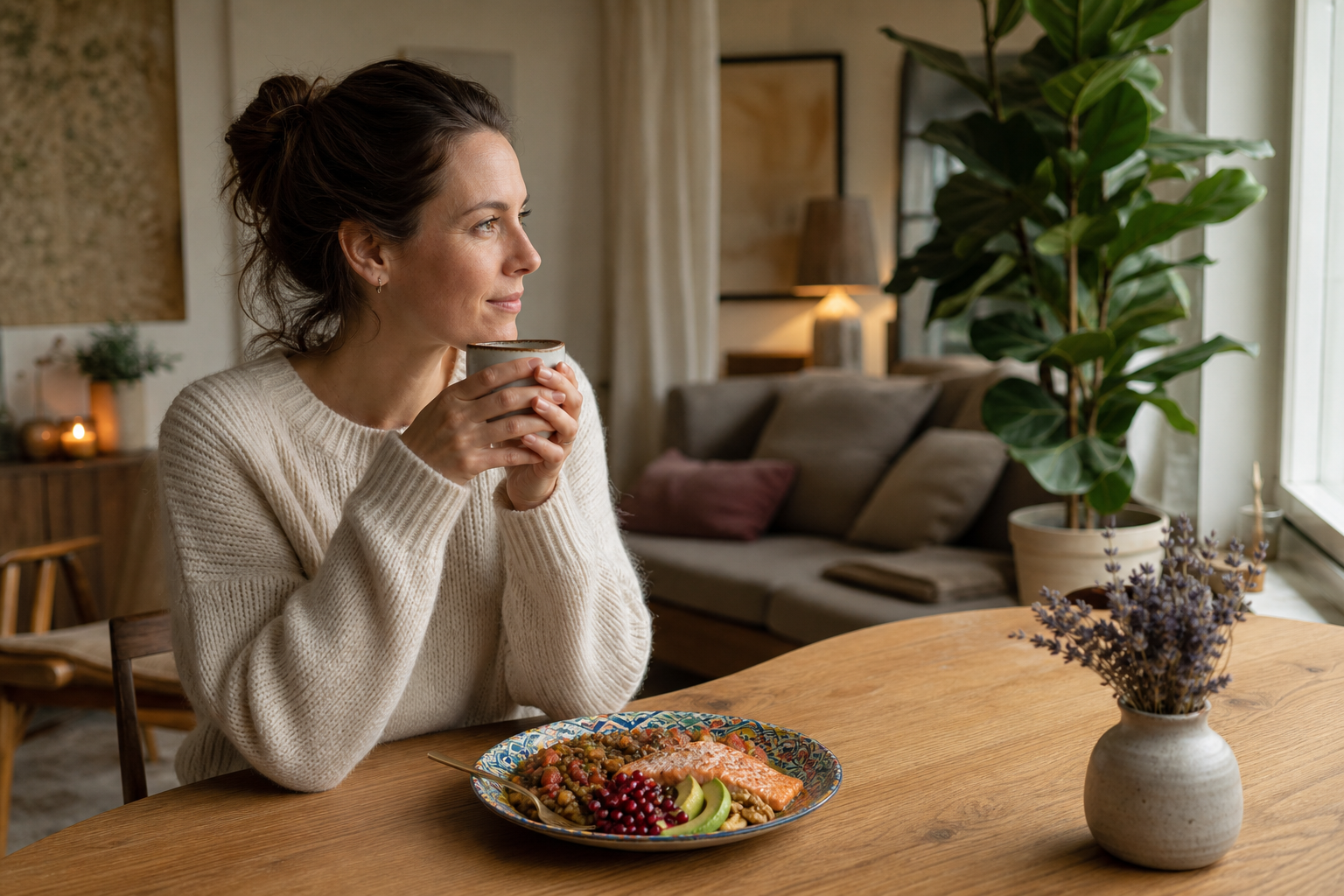
People often find an abstract pattern easier to follow once they can picture it on a plate. Here is what a balanced, fertility-supportive day might look like — a template to adapt, not a prescription.
Breakfast: Oats cooked with milk or a fortified plant milk, topped with berries, walnuts, and a spoon of ground flaxseed. Or eggs with spinach and tomatoes on whole-grain toast with avocado.
Lunch: A lentil and vegetable soup with whole-grain bread, or a large salad of chickpeas, mixed greens, peppers, olives, feta, and olive oil with grilled salmon or chicken.
Afternoon snack: Greek yoghurt with fruit, or hummus with vegetable sticks, or a handful of nuts with a piece of fruit.
Dinner: Baked oily fish with roasted vegetables and a portion of bulgur or quinoa, or a bean and vegetable stew with a green salad, or a tofu stir-fry with brown rice.
Notice the pattern that repeats across the day: a protein anchor, plenty of vegetables, slow whole-grain carbohydrates rather than refined ones, oily fish and other healthy fats for omega-3s, and folate-rich greens and legumes woven throughout. That is the entire preconception strategy in everyday form.
Working Alongside Your Fertility Clinic
Nutrition is one lane of a multi-lane road. If you are under the care of a fertility clinic or gynaecologist, or considering treatments such as ovulation induction or IVF, nutrition works best alongside that care, never as a substitute for it. I always encourage clients to keep their medical team informed and to let me coordinate with the plan they have set rather than pull against it. Your clinic sees the medical picture; nutrition reinforces the foundation underneath it. The two are partners, not competitors, and the best outcomes I see come from clients who let both work together rather than choosing one and abandoning the other.
Working With Hanzi Nutrition
I support women with PCOS who are trying to conceive as a fully online, dietitian-led practice, in English and Turkish, across the Netherlands, Belgium, Germany, and Turkey. Together we build a Mediterranean-leaning, blood-sugar-friendly eating pattern tailored to your body, your culture, and your stage — whether you are just starting to think about conceiving or already in treatment.
A typical engagement begins with a thorough first consultation covering your history, cycles, bloodwork, and any clinic plan, followed by a practical, sustainable plan and ongoing support as things evolve. I coordinate with — and never replace — the care your doctor or fertility clinic provides.
Trying to conceive with PCOS? Contact Hanzi Nutrition to build a supportive, evidence-based eating pattern that works alongside your medical care.
Hanzi Nutrition offers dietitian-led nutrition counselling across the Netherlands, Belgium, Germany, and Turkey, fully online, in English and Turkish. This article is general education and not a substitute for medical or fertility care. Nutrition supports fertility goals but cannot promise conception. Please coordinate any changes to your nutrition or supplements with your doctor or fertility clinic.
Continue reading
- Managing PCOS Without Dieting: A Gentler, More Sustainable Approach
- What to Eat with PCOS: A Dietitian's Practical Food Guide
Ready for personalised nutrition guidance? Book a consultation with Hanzi Nutrition, or explore all our services.